![[튀르키예 1달 렌터카 일주] #5. 안탈리아 여행 2박 3일 코스, 필수 정보 총정리](https://kowitravel.com/wp-content/uploads/2026/09/antalya-travel-65.jpg?v=1789368546)
#5. 지중해의 푸른 진주, 안탈리아 여행 2박 3일
눈부신 지중해의 에메랄드빛 바다와 천년 로마의 역사가 한 품에 공존하는 도시, 튀르키예 남부 최고의 휴양지 안탈리아 여행을 시작합니다.
데니즐리를 출발해 숨은 고대 도시를 거쳐 안탈리아에 이르기까지, 2박 3일 동안 직접 발로 뛰며 기록한 생생한 정보와 시내 필수 명소, 그리고 숙소와 맛집에 대한 솔직한 후기까지 아낌없이 총정리해 드립니다.
Click here to read the English version below!
1. 안탈리아로 가는 길: 드라이브 팁 및 운전 유의 사항
데니즐리에서 안탈리아까지는 차량으로 약 4시간이 소요되는 장거리 코스입니다. 이 코스는 튀르키예 렌터카 여행 중 가장 극적인 감동을 선사하는 구간이기도 합니다.
데니즐리에서 출발할 때만 해도 사방이 황량하고 거친 내륙 분지와 대지의 풍경이 이어집니다. 하지만 안탈리아에 가까워질수록 창밖으로 푸르고 청량한 지중해 바다가 서서히 모습을 드러내는데, 그 극적인 순간의 감흥은 렌터카 여행자만이 느낄 수 있는 특권입니다.
- 도로 상황 및 운전 유의 사항
- ① 국도 및 고속도로 환경 : 전반적으로 왕복 4차선의 국도 정비가 잘 되어 있어 운전 난이도는 높지 않습니다. 다만 산악 지형을 통과하는 구간이 있어 급커브와 경사로에 유의해야 합니다.
- ② 톨게이트 및 결제 : 튀르키예의 고속도로 통행료는 자동 결제 시스템인 HGS로 운영됩니다. 렌터카에 기본 부착되어 있으므로 ‘HGS’ 차선으로 천천히 서행하여 통과하시면 나중에 차량 반납 시 정산됩니다.
- ③ 속도 제한 및 단속 : 국도 곳곳에 이동식 과속 단속 카메라(또는 경찰 차량)가 자주 배치되어 있으므로, 내비게이션의 속도 제한 안내와 도로 표지판을 철저히 준수해야 합니다.
2. 가는 길목에서 만난 숨은 스팟, ‘키비라(Kibyra)’ 고대 유적 도시
오전 일찍 데니즐리에서 출발해 안탈리아로 내려가는 길, 차로 약 1시간 20분쯤 달렸을 때 만날 수 있는 숨은 유적지 ‘키비라(Kibyra)’에 들렀습니다.
이곳은 데니즐리에서 묵었던 숙소인 Aydınoğlu Suites의 친절한 호스트가 “진짜 멋진 곳인데 사람들이 잘 모른다”며 강력하게 추천해 준 특급 비밀 스팟이었습니다.
아는 사람만 아는 유적지답게 매표소에 도착했을 때 주변에 사람이 너무 없어서 ‘우리가 길을 잘못 찾아왔나?’ 싶을 정도로 한산했습니다. 덕분에 거대한 고대 도시 전체를 통째로 대관한 것처럼 여유롭게 거닐 수 있었습니다.
대다수의 여행객이 여행 일정 등 여러 이유로 인해 널리 알려진 유명 관광지만 주로 찾게 되는데, 렌터카 여행을 계획 중이시라면 이동 코스 중간에 쉬어갈 겸 꼭 방문해 보시길 권합니다. 어차피 가는 길목이라 동선도 완벽합니다.
- 키비라 유적 핵심 스팟 훑어보기
1) 1만 2천 명 규모의 거대한 스타디온 (경기장)
소아시아 지역에서 가장 잘 보존된 스타디움 중 하나로, 한쪽 경사면을 따라 길게 뻗은 계단식 대리석 관람석이 압도적인 규모를 자랑합니다. 과거 이곳에서 만 명이 넘는 관중의 함성 속에 검투사 경기와 전차 경주가 열렸던 역사의 현장이라고 합니다.
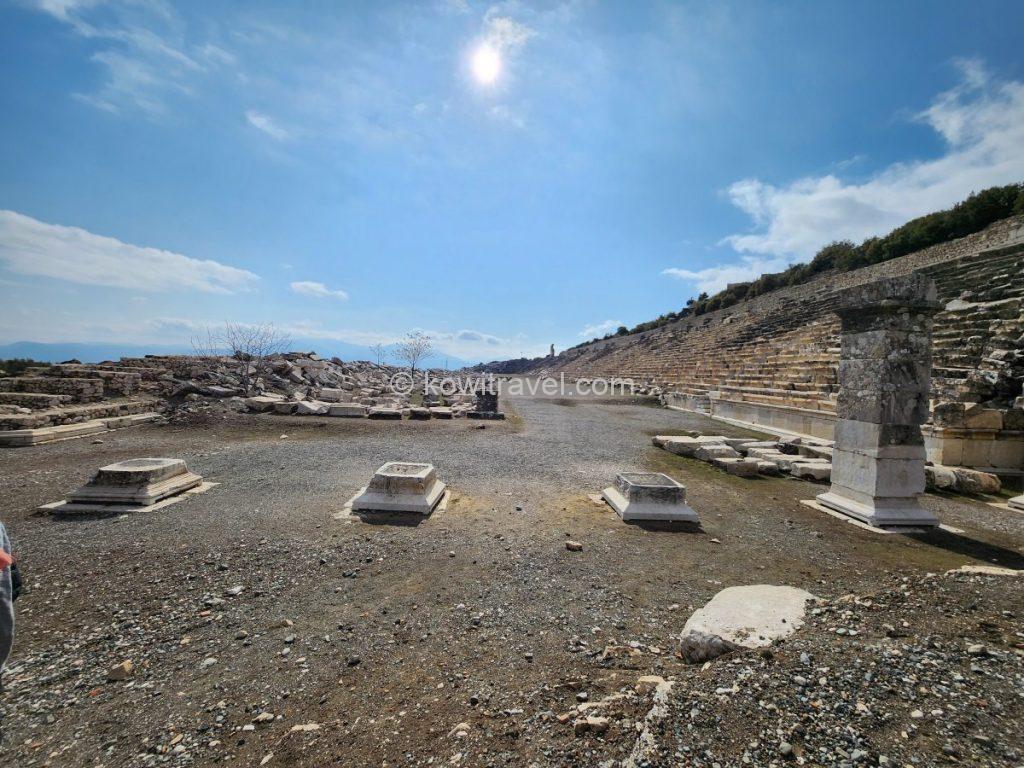
유적지 초입에 위치한 거대한 고대 경기장(스타디움, Stadyon)
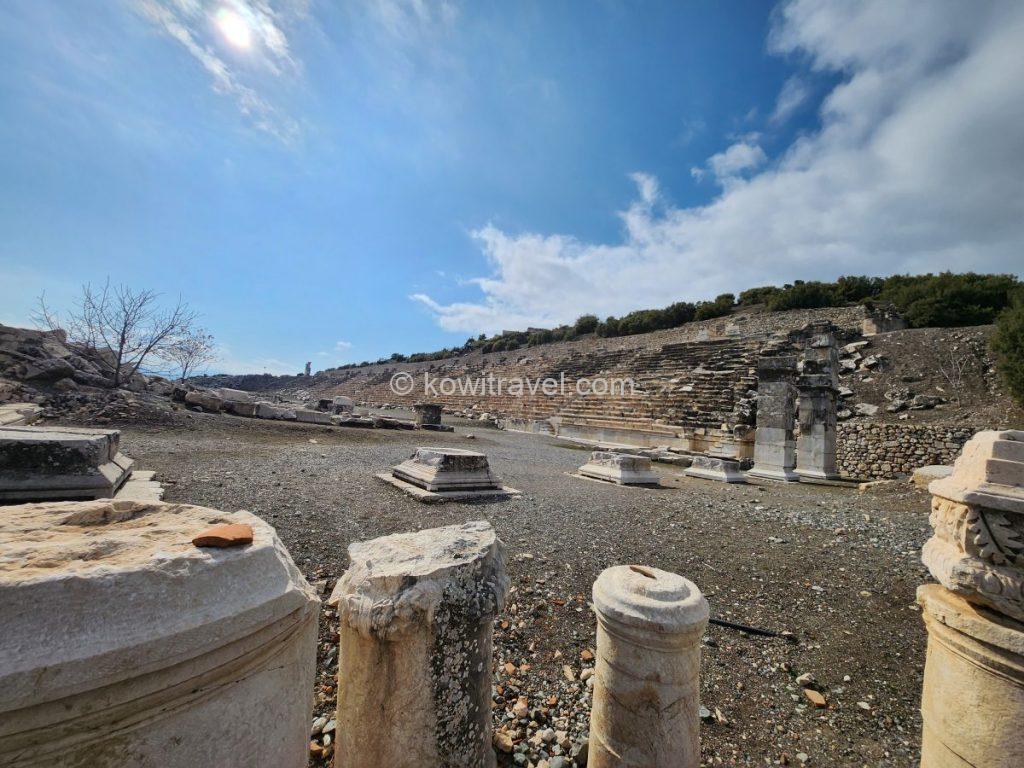
한쪽에 길게 늘어선 계단식 관람석이 인상적이며, 과거 검투사 경기나 육상 경기가 열렸던 역사적인 장소입니다.
2) 고대 로마 목욕탕 단지 (Roman Bath Complex)
유적지 초입 주차장에 차를 대고 오른편을 바라보면 거대한 석조 아치 벽면이 가장 먼저 관람객을 압도합니다.
기원후 1세기경 지어진 이 공공 목욕탕 내부 바닥에는 점토 벽돌 기둥들을 촘촘히 세워 뜨거운 증기를 통하게 했던 로마식 온돌 시스템인 ‘하이포코스트(Hypocaust)’ 유적이 고스란히 남아 있어 당시의 뛰어난 건축 기술을 엿볼 수 있습니다.
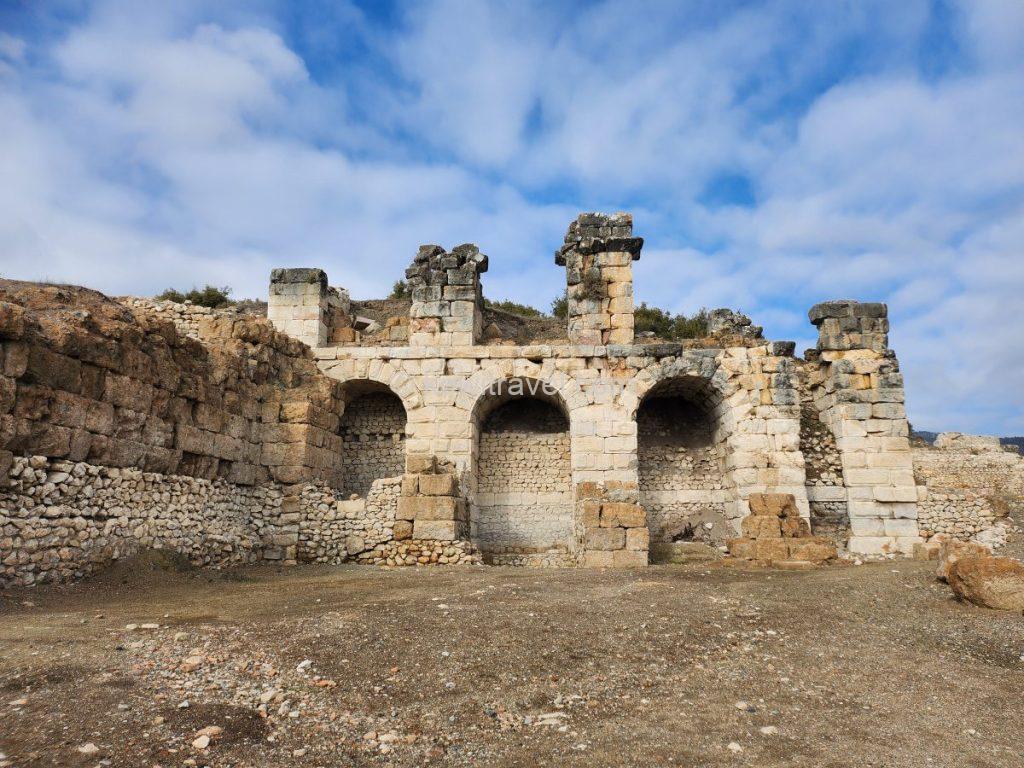
거대한 아치형 구조가 고스란히 남아 있는 고대 로마식 목욕탕 복합단지 ( Roma Hamam Kompleksi)

고대 로마 목욕탕의 온돌 시스템인 히포카우스투스(Hypocaust) 유적입니다. 바닥에 촘촘히 세워진 붉은 벽돌 기둥들 사이로 뜨거운 증기와 공기를 통하게 하여 목욕탕 바닥과 방을 데웠다고 하는데, 고대 로마인들의 천재적인 과학 기술이 경이롭게 느껴집니다.
3) 산비탈을 깎아 만든 웅장한 대형 극장 (Tiyatro)
자연 경사면 절벽을 그대로 활용해 지어진 대규모 야외 극장입니다. 약 9천 명의 관중을 수용할 수 있었던 웅장한 부채꼴 모양의 객석이 잘 보존되어 있습니다.
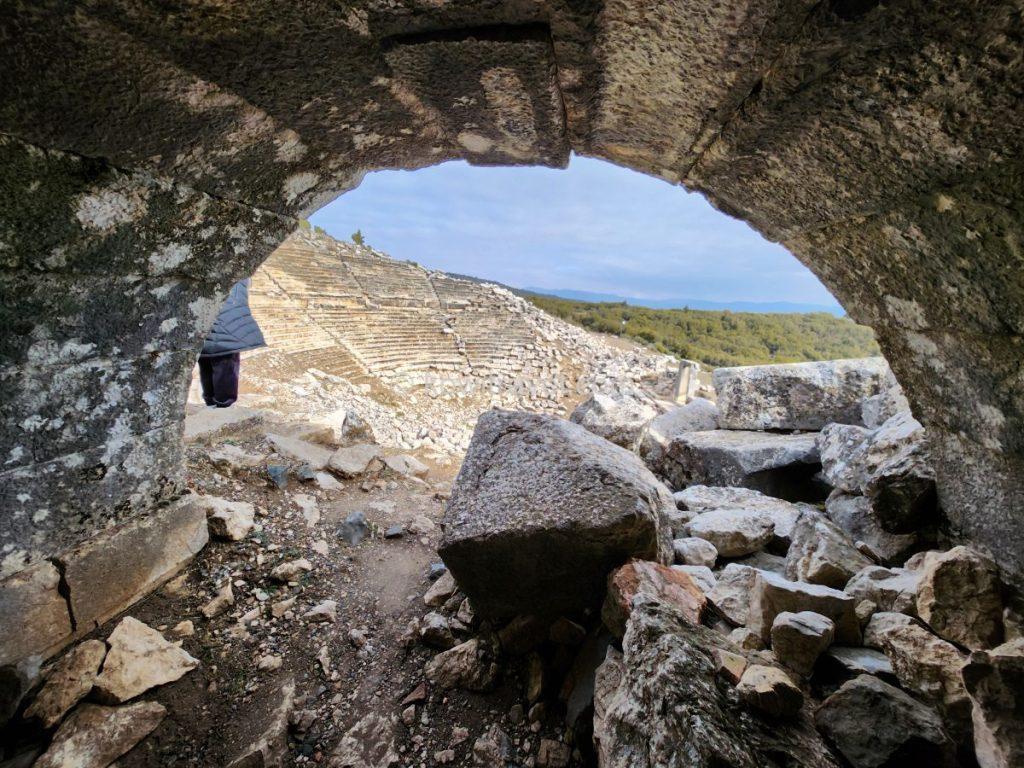
특히 객석 아래쪽으로 정교하게 짜 맞춘 석조 아치형 진입 터널이 남아 있는데, 터널 안에서 아치 너머로 바라보는 고대 극장의 전경은 세월의 깊이를 고스란히 느끼게 해주는 최고의 관람 포인트입니다.

자연 경사면 절벽을 깎아 만든 대형 야외 극장(Tiyatro)의 객석으로 향하는 출입구 석조문입니다.

대형 야외 극장의 중심 무대(Stage) 뒤편 벽 유적. 비록 상부 구조는 무너졌지만, 거대한 석조 벽면과 출입구의 아치들이 여전히 웅장하게 남아 있어 대형 극장의 전체적인 규모감을 잘 보여줍니다.
4) 세계 최대 규모의 오데온 (Odeon, 음악당 및 시 의회)
대형 극장과 분리된 평지 구역에 자리 잡고 있는 오데온은 과거 지붕이 얹어져 있던 실내 음악당이자 고대 도시의 의사당(Bouleuterion) 역할을 하던 곳입니다.
웅장하게 솟아오른 무대 뒤편의 거대한 석조 벽면 외관이 압도적인 분위기를 자아내며, 반원형 계단식 좌석들이 정교하게 집중되어 있어 뛰어난 고대 음향학적 설계를 체감할 수 있습니다. 특히 이 오데온 내부 무대 바닥에는 세계적으로 유명한 ‘메두사 모자이크’가 보존되어 있습니다.
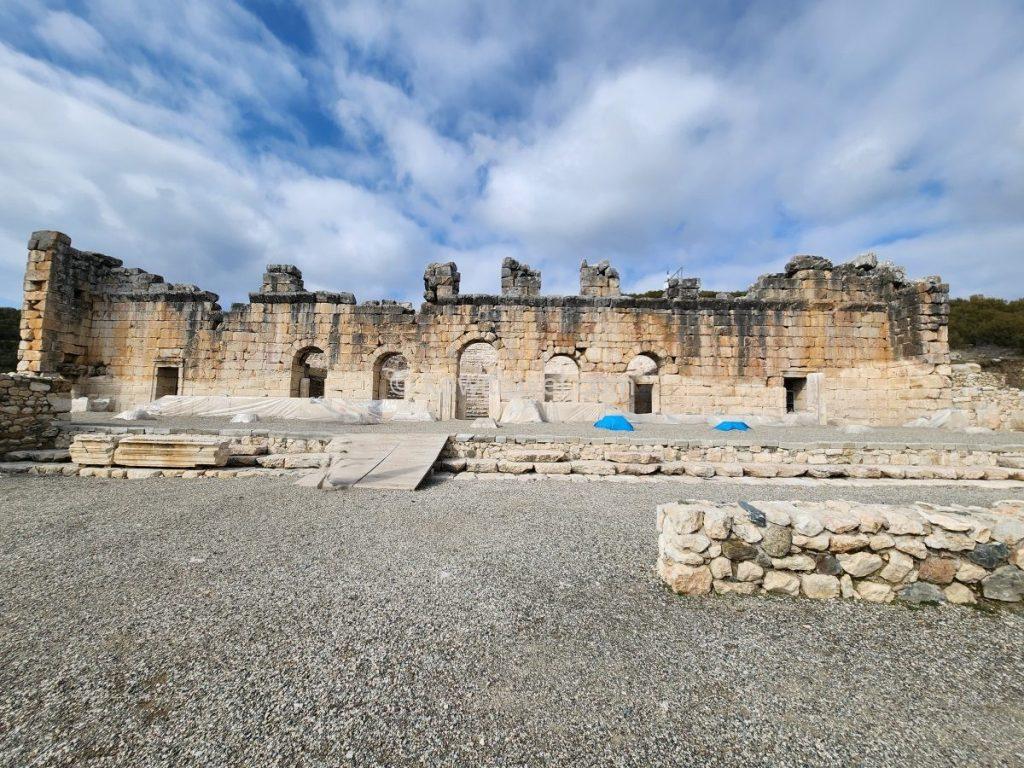
입구에서 바라본 거대한 벽면 외관
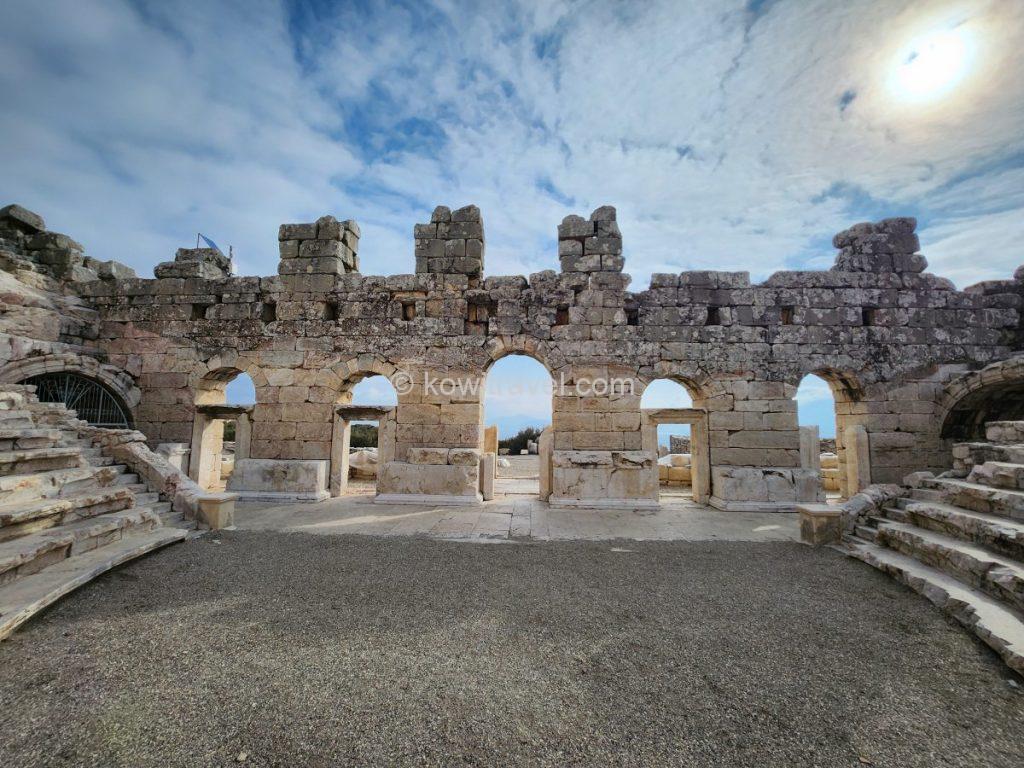
정교한 아치형 문을 통해 바라본 내부 무대와 오케스트라 구역

그리스-로마 극장 건축 구조에서 오케스트라(중앙 무대 공간)로 직접 연결되는 측면 통로. 도시의 고위 관료, 의원, 사제 등 귀빈(VIP)들이 무대 앞쪽의 전용 좌석으로 바로 진입할 수 있도록 설계된 전용 통로라고 합니다.

무대 앞쪽의 귀빈석 과 일반 관람석 중간에서 바라본 무대. 바닥의 유명한 ‘메두사 모자이크’는 수리 때문인지 사진처럼 돌칩들로 가려져 있었습니다.
5) 최근 복원된 아름다운 원형 분수대 (톨로스 님파에움)
키비라 고대 도시 아고라의 세 번째 테라스에 위치한 원형 분수대(Tholos Nymphaeum·톨로스 님파이움)입니다
이 유적은 기원후 23년 대지진 이후 로마 제국 시대에 도시를 재건하면서 처음 건설되었으며, 최근 철저한 고증을 거쳐 1,300년 만에 고대 천연 샘물이 다시 흐르도록 완벽하게 복원되었다고 합니다.
원형 수조 한가운데에 화려한 대리석 기둥과 지붕이 얹어진 독특한 구조를 자랑하며, 고대 수로 시스템을 그대로 살려 현재도 맑은 물이 뿜어져 나와 신비로운 분위기를 자아냅니다.

고대 아고라 광장에서 분수대로 이어지는 돌판 보도(진입로)의 바라본 정면

분수대 중심부의 핵심 구조인 원형 코린트식 기둥과 상부 구조. 6개의 섬세한 코린트식 양식 기둥이 원형으로 배열되어 상부의 보와 원추형 지붕 하중을 받치고 있고, 기둥 사이 바닥에는 신화 속 인물인 헤라클레스, 디오니소스 등이나 사자, 표범 같은 동물 조각상이 놓여 있던 받침대가 있습니다. 이 조각상들의 입을 통해 중앙 풀로 물이 뿜어져 나왔다고 합니다.
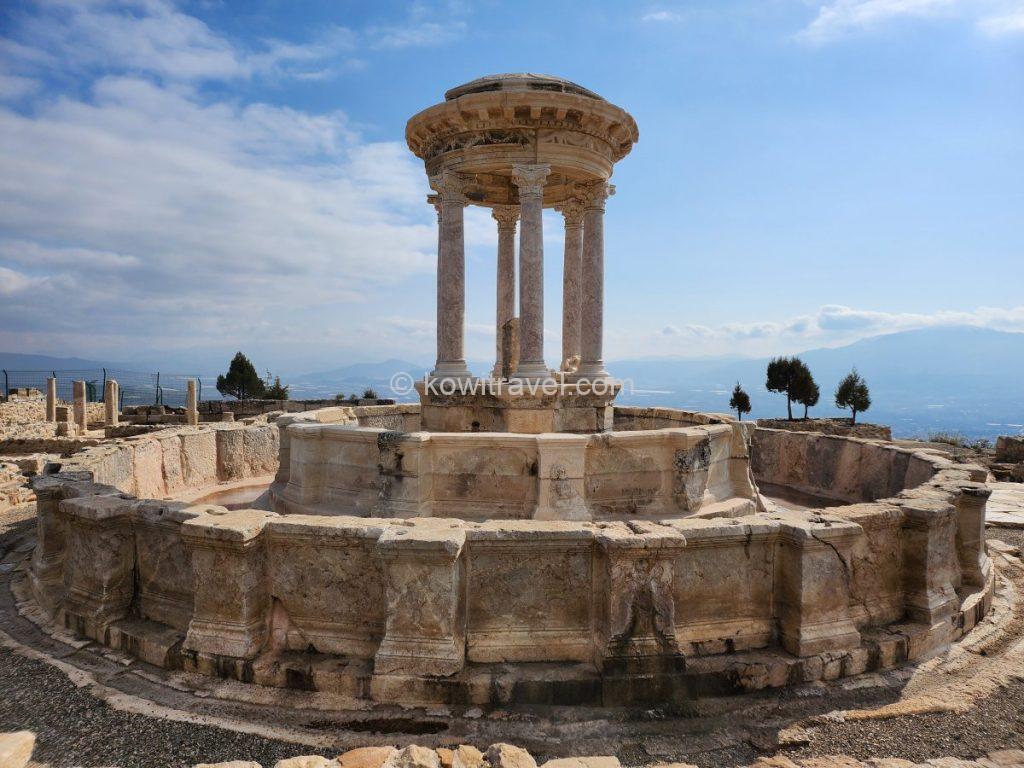
키비라 분수대의 핵심인 ‘이중 원형 풀(Twin Basins)’ 구조. 기둥이 감싸고 있는 가장 안쪽의 제1중앙 풀이 있고, 기원후 2세기 후반에 그 주위를 더 크게 둘러싸며 확장된 제2외곽 풀이 계단식으로 배치되어 있는데, 단순히 아름다운 분수 역할만 한 것이 아니라 사방으로 물을 분배하여 주변 지역에 식수를 공급하는 배수지기능을 겸했음을 바닥의 수로와 홈을 통해 시각적으로 증명해 주고 있습니다.
3. 안탈리아 도착 및 지역별 숙소 선택 가이드
키비라 유적지에서 다시 3시간을 달려 지중해의 진주, 안탈리아에 도착했습니다. 안탈리아는 1990년대 이후 인구가 대규모로 유입되며 급성장한 도시로, 현재 튀르키예에서 이스탄불 다음으로 전 세계 관광객들에게 인기가 많은 최고의 휴양 도시입니다.
연중 온화한 지중해성 기후 덕분에 겨울철에도 여행하기 좋으며, 특히 러시아인들이 장기 체류나 휴양을 위해 굉장히 많이 찾는 도시이기도 합니다.
- 안탈리아 여행 지역별 숙소 추천과 장·단점 비교
저는 Booking.com을 통해 복잡한 구시가지를 피하고자 콘얄티 후르마(Hurma) 지역에 위치한 4성급 “골든 월드 수이트 호텔(Golden World Suite Hotel)”로 예약했습니다.
호텔 바로 근처에 구시가지로 환승 없이 가는 시내버스 정류장이 있어서 이동이 편리했으며, 주차 문제로 시간 낭비하거나 스트레스를 받을 일이 없어서 나름 훌륭한 선택이었다고 생각됩니다.
호텔은 룸 종류에 따라 가격이 서로 다르며, 저희는 장기간의 여행이다 보니 직접 음식을 해 먹어야 해서 주방이 딸려 있는 룸을 사용했고, 시설이나 청결, 넓은 호텔 주차장, 1층 리셉션에서 환전도 가능하는 등 전반적인 서비스면에서는 나름 좋았습니다.
👉 [Golden World Suite Hotel Booking.com 실시간 숙박정보 확인하기]
그런데, 방음은 잘 안된다는 느낌을 받았는데, ‘왜 그럴까? 이 호텔만의 구조적인 문제 때문일까?’ 궁금해하다가 자료를 찾아보니, 이 방음 문제는 비단 안탈리아에만 국한된 것이 아닌, 튀르키예 전 지역에 걸쳐 기후 환경, 건축 자재의 특성, 그리고 과거 규제의 부재가 복합적으로 작용하여 나타나는 고질적인 현상이라고 하더군요.
특히나, 안탈리아 같은 지중해 연안 지역은 연중 온화하거나 여름에 매우 덥기 때문에 열을 발산하고 청소하기 쉬운 대리석, 타일, 또는 단단한 세라믹 바닥재를 주로 사용한다고 합니다.
한국처럼 바닥에 두꺼운 온돌 완충재를 넣지 않고 콘크리트 슬래브 위에 타일을 바로 얹는 경우가 많아, 의자를 끄는 소리나 발걸음 소리 같은 충격음(Impact Sound)이 차단되지 않고 아래층이나 옆방으로 고스란히 진동하여 전달된다고 하니, 안탈리아 여행 계획이 있으신 분들은 참고하시면 도움이 될 것이라 생각됩니다.
안탈리아는 숙소를 잡는 지역에 따라 여행의 분위기가 완전히 달라집니다. 대표적인 세 지역을 비교해 드립니다.
1) 칼레이치 구시가지 지역
- 장점: 주요 역사 명소와 맛집, 구항구가 몰려 있어 도보 여행에 최적화되어 있습니다. 오스만 양식의 고풍스러운 부티크 호텔이 많아 분위기가 좋습니다.
- 단점: 칼레이치 구시가지의 전통 부티크 호텔 같은 숙소들은 대부분 오스만 제국 시절의 고풍스러운 대저택(Konak)을 개조한 건물로서 시각적으로는 매우 아름답지만, 목재라는 자재의 특성과 고대 건축 방식 때문에 현대식 콘크리트 건물보다 구조적으로 방음에 훨씬 더 취약할 수밖에 없습니다.
2) 라라 해변(Lara) 지역
- 장점: 올인클루시브 최고급 리조트들이 해안선을 따라 밀집해 있어, 이동 없이 숙소 안에서 온전한 휴양을 즐기려는 가족 단위 여행객에게 안성맞춤입니다.
- 단점: 구시가지에서 동쪽으로 12~13km 정도 떨어져 있는 지리적 위치로 인해 차량으로 이동을 해야 하기에 관광을 병행하기에는 교통이 다소 불편합니다.
3) 콘얄티(Konyaaltı) 지역
- 장점: 탁 트인 자갈 해변을 끼고 있으며, 세련되고 현대적인 아파트먼트와 가성비 좋은 호텔이 많아 한 달 살기 등 장기 투숙자들에게 인기가 높습니다. 복잡하고 시끄러운 구시가지를 피하기 좋습니다.
- 단점: 구시가지까지 가려면 버스나 트램 등 대중교통을 이용해야 하며, 이동 시간이 대략 35분~40분 정도 걸립니다.
4) 콘얄티에서 구시가지 이동 및 주차 방법
만약 숙소를 저희처럼 구시가지 외곽(콘얄티 등)으로 정하셨다면 아래의 교통 팁을 참고하세요.
- ① 대중교통 이용 (강력 추천): 튀르키예는 구글 맵으로 버스 실시간 정보가 아주 잘 연동됩니다. 저희 숙소 앞 버스정류장[번호 10453(252 Sk-5)]에서 ML22번 버스를 타면, 환승 없이 칼레이치 구시가지 입구 근처(Meydan 방향)까지 약 35~40분 만에 편하게 이동할 수 있습니다.

안탈리아 여행중의 호텔 앞 버스 정류장
- ② 시내 주차 팁: 칼레이치 구시가지는 도로가 일방통행이 많고 골목길이 비좁아 초행길 운전이 지옥과 같습니다. 렌터카를 가져가실 경우 구시가지 내부로 진입하려 하지 마시고, 구시가지 외곽 경계에 있는 유료 공영 주차장에 차를 대고 도보로 걸어 들어가시는 것이 훨씬 시간도 절약되고 주차 스트레스로부터 자유로울 수 있습니다.
4. 안탈리아 여행 시내 필수 추천 명소
1) 칼레이치 구시가지 도보 탐방 코스
안탈리아 여행의 심장은 ‘칼레이치(Kaleiçi)’라 불리는 구시가지입니다. 좁고 구불구불한 골목길을 따라 오스만 제국 양식의 고전적인 주택들이 즐비하여, 골목 구석구석을 정처 없이 거닐며 쇼핑을 하고 현지인들의 삶을 보고 느끼는 것 자체가 여행 최고의 묘미가 아닐까 싶습니다.
① 하드리아누스의 문 (Hadrian’s Gate)
구시가지의 화려한 관문입니다. 기원후 130년 로마 제국의 하드리아누스 황제 방문을 기념해 대리석으로 지은 아름다운 개선문입니다. 일반적인 로마 개선문이 거대한 단일 아치 형태를 띠는 것과 달리, 이 문은 정교한 조각이 새겨진 3개의 연속된 아치 구조를 가지고 있는 것이 특징입니다.

안탈리아 여행의 시작점. 세 개의 아치로 이루어져 있어 ‘삼문’이라고도 불리며, 신시가지와 구시가지(칼레이치)를 나누는 경계이자 안탈리아 투어의 핵심 시작점입니다.

안쪽에서 바라본 하드리아누스의 문
② 이블리 미나레 모스크 & 안탈리아 시계탑
13세기 셀주크 투르크 시절에 세워진 이블리 미나레(Yivli Minare)는 독특한 주름 모양의 붉은 벽돌 첨탑으로, 13세기 셀주크 왕조 시대에 지어진 38m 높이의 독특한 홈이 파인 기둥 모양이며, 도시 어디서나 잘 보여 안탈리아의 나침반 역할을 해주는 상징적인 랜드마크입니다.
그 바로 근처에는 고대 성벽의 일부를 개조해 만든 유서 깊은 시계탑이 당당히 서 있습니다. 과거 고대 로마 및 비잔틴 제국 시절 도시를 방어하던 성벽과 요새의 일부(개선문 또는 타워)였던 석조 구조물 위에, 19세기 말 오스만 제국 시절 상부 탑을 추가로 쌓아 올린 독특한 역사적 융합 건축물이라고 합니다.

붉은 지붕들 사이로 우뚝 솟은 안탈리아의 상징, 이블리 미나레(플루트 첨탑)의 모습입니다. 안탈리아 시내 어디서나 눈에 띄는 대표 이정표입니다.

고대 로마나 비잔틴 건축물에서 가져온 석조 기둥과 아치형 천장 구조가 그대로 남아 있어 독특한 역사적 분위기를 자아냅니다.

안탈리아 구시가지(칼레이치)의 가장 상징적인 관문이자 랜드마크인 안탈리아 시계탑. 시계탑이 있는 광장은 구시가지(칼레이치) 도보 여행이 시작되는 사실상의 ‘0km 기점’이자 만남의 광장입니다. 이곳을 중심으로 이블리 미나레와 테켈리 메흐메트 파샤 자미가 모두 사방으로 연결되어 있어, 여행자들에게 훌륭한 길잡이 역할을 해줍니다.
③ 테켈리 메흐메트 파샤 자미 (Tekeli Mehmet Paşa Camii)
오스만 제국 시절인 17세기에 대재상(Grand Vizier)이었던 테켈리 메흐메트 파샤의 지시로 건설된 유서 깊은 모스크로, 구시가지 중심부에서 고풍스러운 자태를 뽐냅니다. 내부의 아름다운 타일 장식과 정교한 아랍어 캘리그래피가 인상적입니다. 구시가지(칼레이치) 입구이자 시계탑 바로 뒤편에 위치해 있습니다.
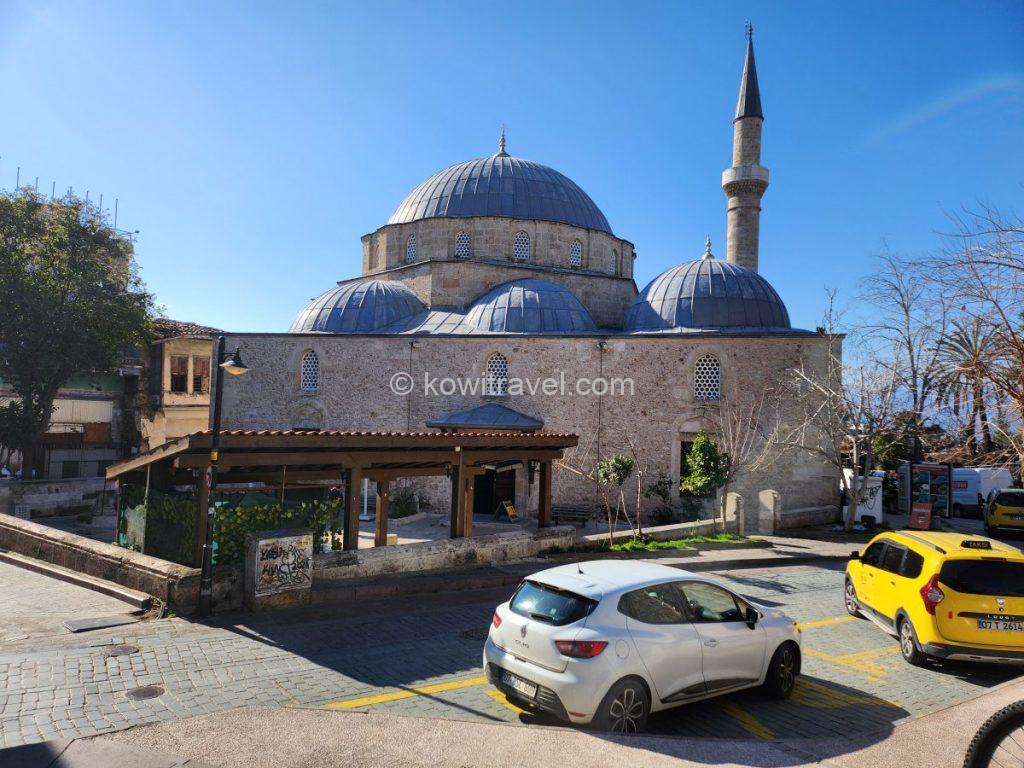
테켈리 메흐메트 파샤 모스크 외관.
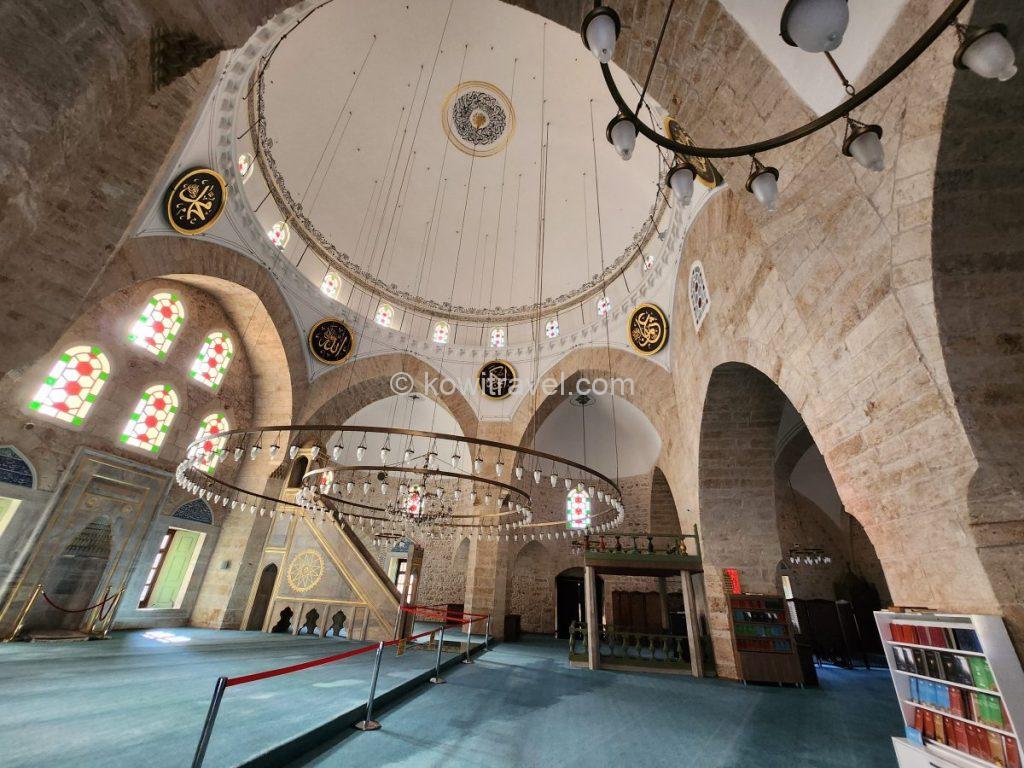
중앙의 거대한 메인 돔을 중심으로 여러 개의 작은 반원형 돔들이 정교하게 감싸고 있는 전형적인 오스만 제국 양식의 아름다운 곡선미를 보여줍니다.
④ 칼레이치 감성 골목길과 노스탤직 트램
구시가지 골목 중에서도 핑크빛 부겐빌레아 꽃 장식과 아기자기한 빈티지 소품들이 가득한 골목이 있습니다.
그곳에 위치한 유명한 ‘차이티스 부티크 카페(ÇaY-Tea’s Boutique Café)’ 앞 노천 테이블은 인생 사진을 남기기에 최고의 스팟입니다. 이곳에서 정성스럽게 서빙되는 다양한 블렌딩 터키 티(Çay)나 라벤더 치즈케이크를 즐기며 쉬어가기 좋습니다.

유명 감성 스팟인 ‘차이티스 부티크 카페’ 앞 노천 공간. 큰 나무 아래로 따스한 햇살이 스며들고, 화려한 분홍빛 부겐빌레아 꽃 장식과 빈티지한 소파, 아기자기한 야외 테이블이 어우러져 동화 속 한 장면 같은 낭만적인 분위기를 자아냅니다.

카라타이 메드레세 이정표 구시가지 돌바닥길. 13세기 셀주크 투르크 제국 시대에 지어진 유서 깊은 이슬람 신학교(메드레세) 유적으로 향하는 길목이라고 합니다.

안탈리아 여행 칼레이치 구시가지 골목길. 왼편 건물의 2층을 보시면 벽면보다 밖으로 튀어나와 있는 독특한 창문 구조가 오스만 제국 시절의 전형적인 가옥 양식인 ‘줌바(Cumba)’ 구조라고 합니다. 방음이 취약한 전통 흐미쉬(목조 프레임) 공법 가옥의 전형을 보여줍니다.
더불어 탁 트인 대로변으로 나오면 안탈리아의 또 다른 명물인 빨간색 구형 트램이 지나다니는데, 야자수와 어우러진 복고풍 풍경이 무척 이국적입니다.
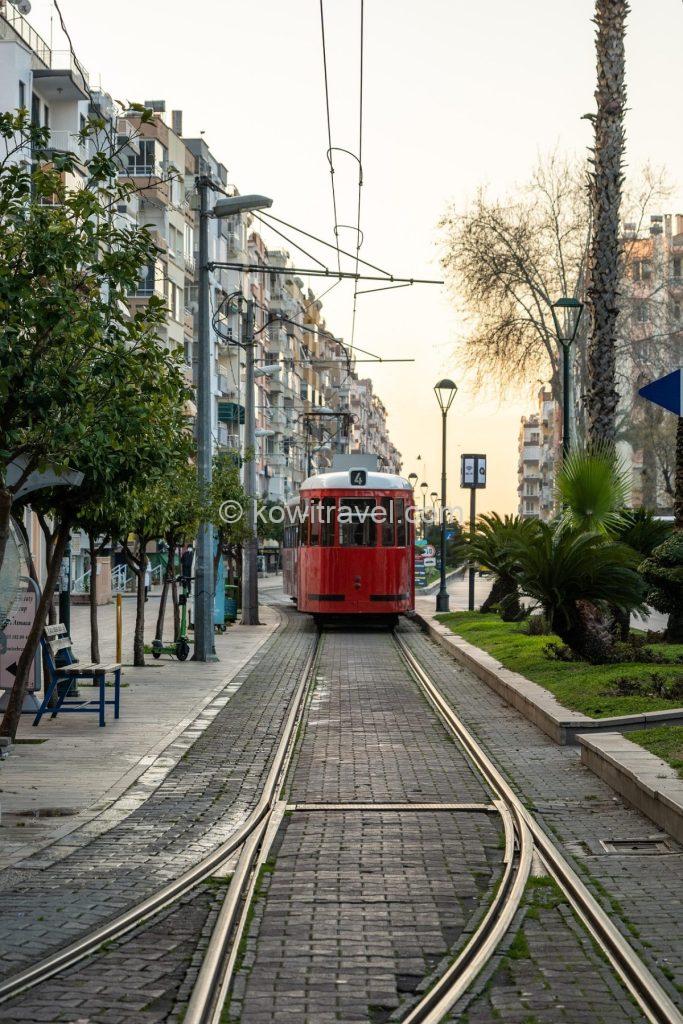
카라알리오루 공원 방향으로 길게 이어진 야자수 대로변 선로 위를 달리는 클래식한 빨간색 구형 트램
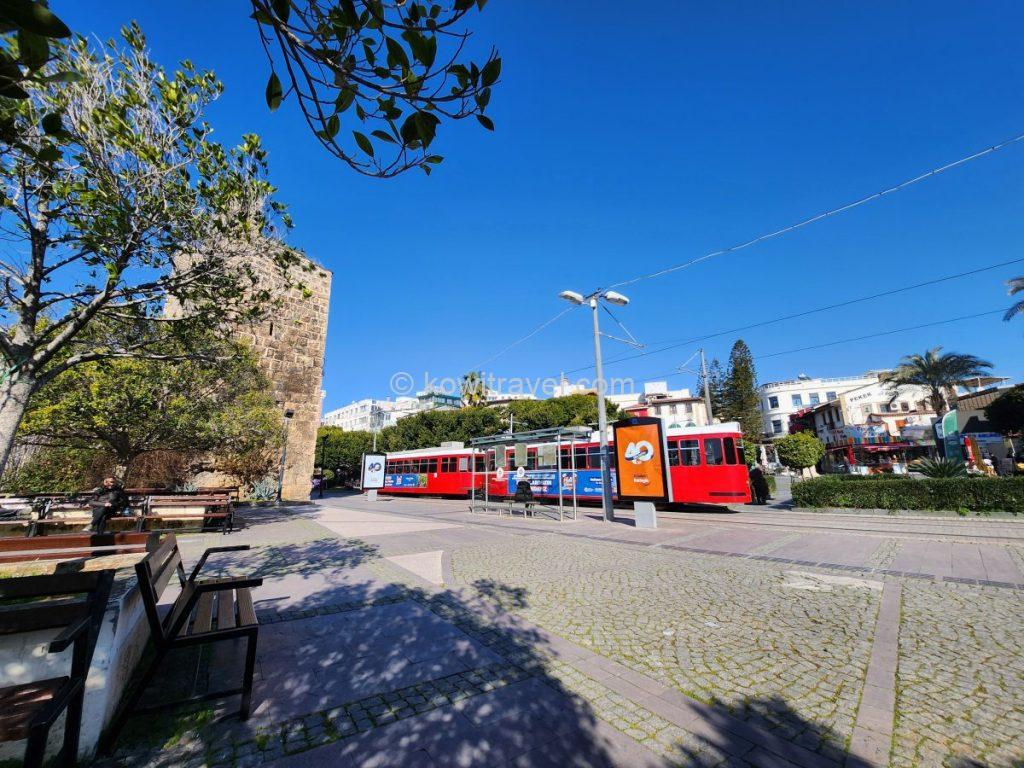
구시가지의 상징인 유서 깊은 석조 성벽(왼쪽) 바로 옆을 지나 정류장에 진입 중인 노스탤직 트램. 수십 년 된 아날로그 트램이 현대적인 시내 풍경과 공존하며 달리는 안탈리아 특유의 독특한 도시 구조를 보여줍니다.
⑤ 흐디를릭 탑 (Hıdırlık Tower)
안탈리아 구시가지(칼레이치) 남쪽 끝자락, 푸른 지중해가 한눈에 내려다보이는 해안 절벽 위에 서 있는 웅장한 고대 로마 시대의 돌탑입니다.
기원후 2세기경 고대 로마 제국 시절에 지어진 것으로 추정된다고 하며, 높이는 약 14m에 달합니다. 과거 지중해를 항해하는 배들을 인도하는 등대(Lighthouse) 역할과 동시에, 외부 적의 침입을 가장 먼저 감시하고 방어하는 방어 요새(Fortress) 및 관측소 역할을 겸했던 유서 깊은 방어 시설이랍니다.
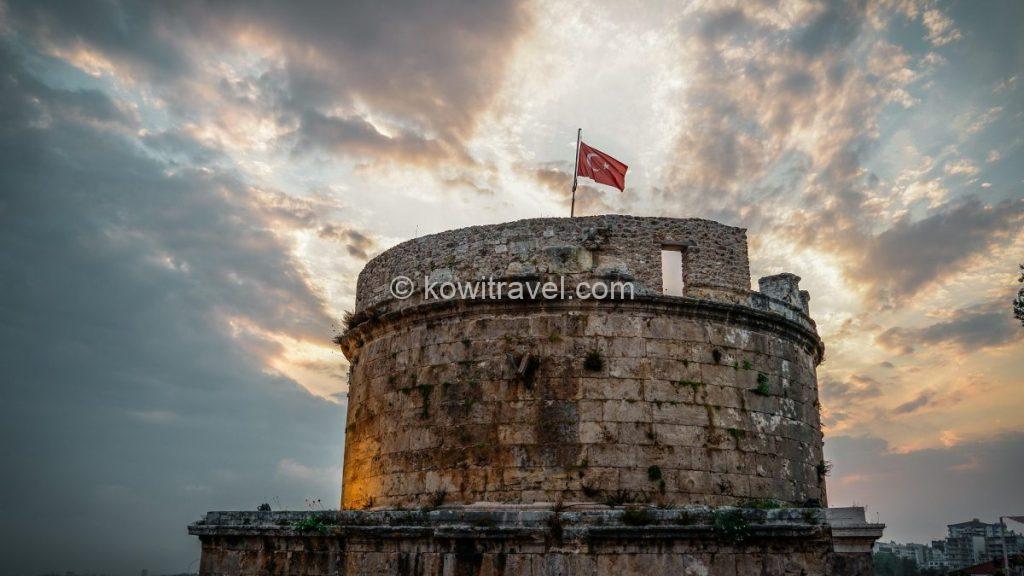
안탈리아 여행 코스 칼레이치 구시가지 흐디를릭 탑 일몰 전경.
⑥ 마리나 구항구 (Old Harbor) & 파노라마 엘리베이터
붉은 기와지붕의 전통 가옥들에 둘러싸인 아늑한 반원형의 항구입니다. 에메랄드빛 바다 위로 수많은 목조 유람선들이 정박해 있어 이국적인 풍경을 선사합니다.
위쪽 시내에서 이 항구로 내려올 때는 탁 트인 유리창으로 항구 전경을 감상할 수 있는 ‘칼레이치 파노라마 엘리베이터’를 이용하면 편리합니다.

구시가지 높은 지대에서 절벽 아래 마리나 항구로 걸어서 내려가는 유서 깊은 석조 계단길. 계단 초입 왼편에 ‘블루 파라다이스’ 레스토랑의 메뉴판이 있어, 이 길이 항구 주변 맛집 거리가 시작되는 통로임을 보여줍니다.


마리나 구항구의 해안 잔디 공원과 선착장에 평화롭게 정박해 있는 클래식한 목조 유람선들
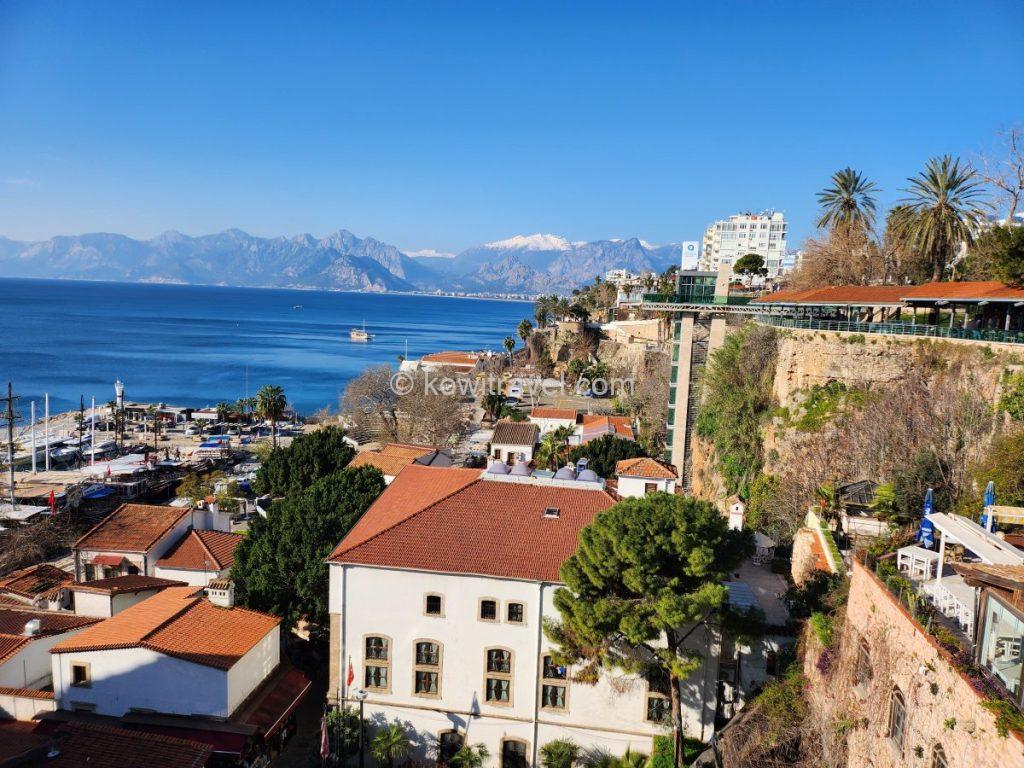
구시가지(칼레이치)와 마리나 항구를 연결하는 칼레이치 파노라마 엘리베이터. 무료 공공 엘리베이터이며, 투명한 유리 통창으로 만들어져 있습니다.
⑦ 메르메를리 해변 (Mermerli Beach)
구항구 바로 옆 성벽 아래 숨겨진 작은 해변입니다. 이곳은 완벽한 프라이빗 해변(Private beach)인 관계로, 절벽 위에 위치한 ‘메르메를리 레스토랑’을 통해서 입장료를 지불해야만 들어갈 수 있으니 방문 시 참고하세요.


⑧ 성 니콜라스 성당 (St. Nicholas Church)
안탈리아 시내에 위치한 유일한 성당입니다. 현재 러시아 정교회 소속의 신부님이 영어와 러시아어로 미사를 집전하고 있습니다. 가톨릭이나 개신교, 정교회 신자 분들이라면 여행 중 방문하여 미사에 참석해 보는 것도 뜻깊은 경험이 될 것입니다.


안탈리아 구시가지 골목길 안에 숨겨지듯 자리 잡고 있는 성 니콜라스 성당 ( St. Nikolaus Kirche )의 외관과 현판
2) 차량 및 대중교통 이동 코스 (대자연과 문화)
① 뒤덴 공원 & 뒤덴 폭포 (Düden Waterfalls)
뒤덴 공원은 구시가지에서 동쪽으로 대략 8~10km 정도 떨어진 곳에 위치하고 있으며, 15분~20분 정도 걸립니다. 공원 입구로 들어서면 엄청나게 강한 물살의 하천이 흐르고 있으며, 그 위로 액티비티를 즐길 수 있는 짚라인이 설치되어 있습니다.
하이라이트는 공원 옆 해안 절벽 산책로를 따라 걸었을 때 나타납니다. 절벽 위에서 우렁찬 굉음을 내며 지중해 바다로 직접 수직 하강하는 하부 뒤덴 폭포의 장엄한 물줄기는 가슴을 뻥 뚫리게 만듭니다.
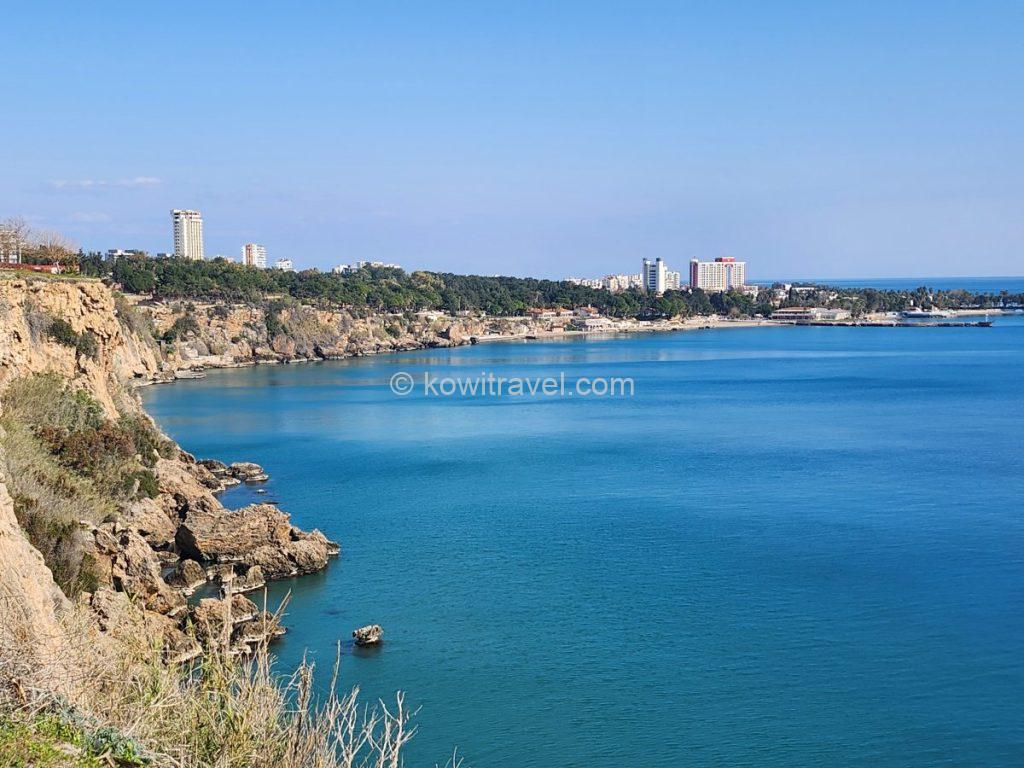
뒤덴 공원 절벽 위에서 동쪽 라라 해변(Lara Beach) 방향으로 길게 뻗은 석회암 해안 절벽과 지중해 바다의 전경.


절벽 위를 따라 조성된 목재 데크 산책로와 , 40m 높이에서 지중해로 수직 하강하는 하부 뒤덴 폭포
“시원하게 쏟아지는 듀덴 폭포의 생생한 소리를 아래 영상으로 확인해 보세요!”
② 콘얄티 해변 (Konyaaltı Beach)
안탈리아 서쪽에 길게 뻗은 해변으로, 특이하게 모래사장이 아닌 동글동글하고 깨끗한 조약돌(자갈)로 이루어져 있습니다. 파도가 칠 때마다 조약돌 굴러가는 소리가 무척 아름다우며, 시내에서 노스탈지 트램을 타거나 차량으로 쉽게 접근할 수 있습니다.

안탈리아 시내 서쪽에 끝없이 펼쳐진 자갈 해변인 콘얄티 해변의 웅장한 모습
③ 라라 해변 (Lala Beach) & 모래 조각공원 (Sandland)
구시가지에서 차로 대략 35여 분 정도 떨어진 도시 동쪽에 위치한 고운 모래 해변으로, 현지인들이 야외 바비큐 시설을 이용해 피크닉을 즐기는 여유로운 곳입니다.
해변 한쪽에는 세계적인 규모의 대형 모래 조각들이 전시된 모래 조각공원(Sandland)이 있어 함께 둘러보기 좋습니다. 전 세계의 예술가들이 거대한 모래로 정교하게 만든 역사적 인물이나 신화 속 캐릭터 조각들을 야외에서 관람할 수 있습니다.

드넓은 모래사장 해변. 자갈이 많은 콘야알티 해변과 달리 고운 모래가 특징이며, 바로 앞에 바베큐 기기와 야외 테이블이 설치되어 있어 현지인들이 많이 찾는 곳이랍니다.

조각 박물관 입구. 입장료는 당시 350리라였습니다.


역사적 인물이나 신화 속 캐릭터 조각들이 거대한 모래로 정교하게 만들어져 전시되어 있습니다.
④ 안탈리아 고고학 박물관 (Antalya Museum)
튀르키예 전역을 통틀어 가장 가치 있는 박물관 중 하나입니다. 주변 페르게, 아스펜도스 등 로마 유적지에서 발굴된 신들의 조각상과 유물들이 완벽한 보존 상태로 전시되어 있어 로마 역사의 장엄함을 온몸으로 느낄 수 있습니다.
5. 안탈리아 여행에서 즐긴 로컬의 맛 (음식 추천)
지중해의 풍요로움을 담은 안탈리아는 먹거리 또한 가득합니다.
1) ‘알리 산 카페 & 비타민 바’에서 맛본 메네멘 (Menemen)
칼레이치 골목길을 걷다 우연히 발견한 소박한 로컬 식당 ‘알리 산 카페 & 비타민 바’에서 점심을 먹었습니다. 이곳에서 터키 유명 음식인 ‘메네멘’을 주문했는데, 꼭 뚝배기나 넓고 납작한 전용 금속 냄비(사츠) 같은 곳에 자작하게 끓여져 나왔습니다.
토마토, 피망, 달걀과 향신료가 어우러진 국물이 자작한 이 음식은 마치 한국의 얼큰한 순두부찌개 같은 느낌을 주어 장기 여행에 지친 속을 달래주기에 최고였습니다. 함께 나오는 터키 전통 빵 ‘에크멕’을 푹 찍어 먹으면 환상적입니다. 주문 즉시 짜주는 신선한 석류·오렌지 생과일주스도 일품입니다.


알리 산 카페 & 비타민 바(Ali San Cafe & Vitamin Bar)의 평화로운 야외 테라스와 정겨운 로컬 식당의 풍경
2) 안탈리아식 피야즈 (Piyaz)
안탈리아에 오면 꼭 먹어야 하는 로컬 푸드입니다. 일반적인 터키식 하얀 콩 샐러드와 달리, 안탈리아식 피야즈는 고소한 타히니(참깨 소스)를 베이스로 하여 걸쭉하고 깊은 맛을 내는 것이 특징입니다.
타히니 아이스크림(Tahinili Dondurma)과 함께 안탈리아의 독특한 디저트 문화도 경험해 보세요.
3) 해산물 및 로컬 슈퍼마켓 과일
지중해 휴양 도시답게 구항구 주변 레스토랑에서 신선한 해산물 요리를 즐길 수 있습니다. 또한, 골목마다 있는 로컬 슈퍼마켓에서 파는 신선하고 저렴한 과일들과 매일 구워져 나오는 겉바삭한 에크멕 빵은 그 자체로 훌륭한 한 끼 식사가 됩니다.
“생생한 안탈리아 여행 YouTube 영상으로도 보세요!”
6. 놓치면 아쉬운 안탈리아 여행 근교 핵심 명소 가이드
저희는 사전에 방문계획을 세워 놓고, 사전 조사도 끝마쳤으나, 2박 3일의 빡빡한 일정으로 인해 아쉽게도 결국 방문하지는 못했지만, 안탈리아 여행을 3박 이상 여유롭게 계획하시는 독자분들을 위해 현지에서 꼼꼼히 조사한 검증된 근교 스팟 3곳을 소개해 드립니다. 여행 계획에 꼭 참고해 보세요! (※ 아래 명소 사진 출처: Pixabay)
1) 신화와 바다가 만나는 로맨틱 스팟, 시데(Side)
안탈리아에서 동쪽으로 약 1시간 15분 거리에 위치한 해안 도시입니다. 바닷가 바로 앞 절벽에 당당히 서 있는 ‘아폴론 신전’이 하이라이트입니다.
푸른 지중해 바다와 붉게 물드는 낙조, 그리고 고대 로마의 신전 기둥이 어우러지는 풍경은 튀르키예에서 가장 로맨틱한 사진을 남길 수 있는 곳으로 유명합니다.
- 역사적 배경: 기원전 7세기경 그리스 이주민들에 의해 건설된 고대 항구 도시입니다. 한때 지중해 동부의 해적 기지이자 노예 무역의 중심지라는 어두운 역사를 거쳤지만, 로마 제국 시절 막강한 상업 도시로 전성기를 누렸습니다. 특히 이집트의 여왕 클레오파트라와 로마의 장군 안토니우스가 사랑을 나누며 데이트를 즐겼던 역사적 장소로 유명합니다. 바닷가 절벽 끝에 서 있는 아폴론 신전(Temple of Apollo)의 거대한 하얀 대리석 기둥 뒤로 붉게 물드는 지중해의 낙조는 튀르키예 전체를 통틀어 가장 로맨틱한 풍경을 선사합니다.
- 안탈리아 시내에서 가는 방법: 안탈리아 시외버스 터미널(Antalya Otogar)에서 마나브가트(Manavgat)행 직행 버스를 탑승합니다. 약 1시간 30분 정도 소요되며, 마나브가트 터미널에 도착한 후 터미널 바로 앞에서 상시 운행하는 시데행 로컬 미니버스인 돌무쉬(Dolmuş)로 환승하면 15분 만에 시데 고대 도시 입구에 닿을 수 있습니다.
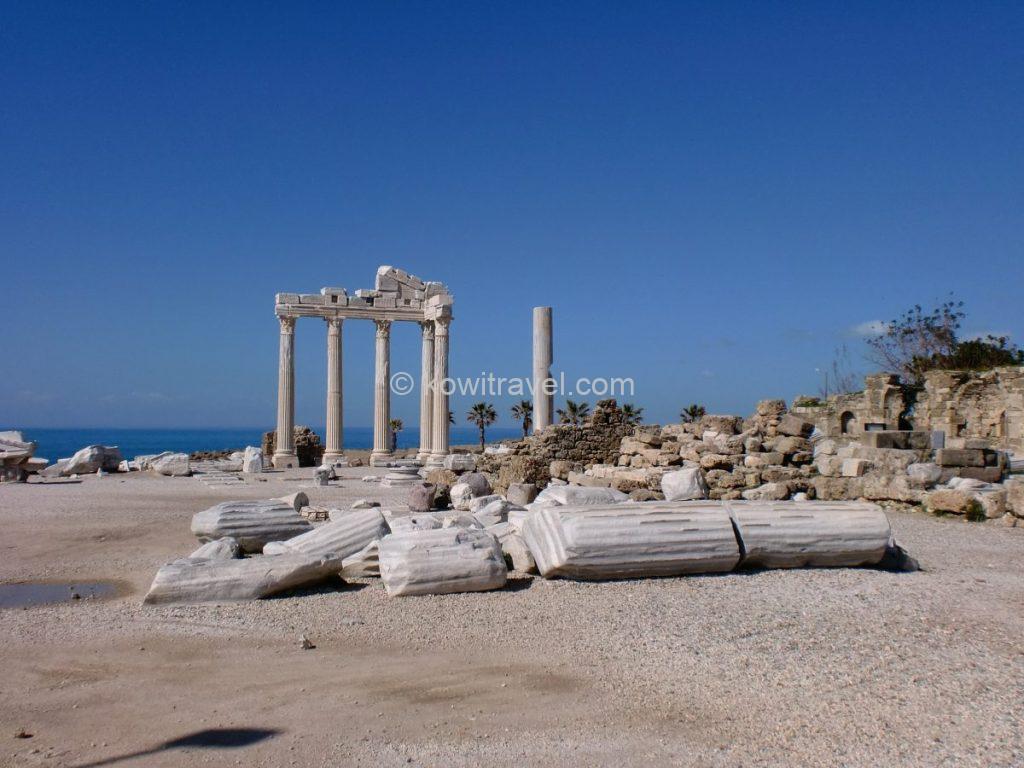
아폴론과 아테나 신전 유적. 푸른 지중해 바다를 배경으로 우뚝 솟은 하얀 대리석 기둥들이 인상적입니다.


아폴론 신전의 정면과 상부 메두사 조각
2) 천년 로마의 숨결이 숨 쉬는 대도시, 페르게(Perge)
안탈리아 시내에서 차량으로 약 30분이면 도착하는 가장 가까운 대형 고대 로마 도시 유적입니다. 보존 상태가 매우 훌륭한 원형 극장과 스타디움은 물론, 도시 한가운데를 길게 가로지르는 대형 분수 수로 시스템이 남아 있어 고대 로마 시대로 시간 여행을 떠난 듯한 웅장함을 선물합니다.
- 역사적 배경: 안탈리아 근교에서 로마 시대의 정교한 도시 계획을 가장 완벽하게 엿볼 수 있는 거대 유적지입니다. 헬레니즘 시대를 거쳐 로마 제국 시절 팜필리아 지방의 수도로 번성했던 곳으로, 기독교 역사에서는 사도 바울이 1차 전도 여행 당시 마가 요한과 함께 방문하여 첫 설교를 했던 성지이기도 합니다. 유적지 내에는 만 명 이상을 수용했던 대형 경기장과 정교한 기둥들이 길게 늘어선 열주 도로, 그리고 도시 전체를 관통하며 열기를 식혀주던 대형 분수 수로 시스템이 온전히 남아 있어 로마의 장엄한 스케일을 온몸으로 체감할 수 있습니다.
- 안탈리아 시내에서 가는 방법: 안탈리아 시내 중심가에서 도시 철도인 안트라이(Antray) 트램 T1A 라인(EXPO 방향)을 타고 종점 직전인 ‘악수(Aksu)’ 역에서 하차합니다. 트램으로 약 50분 정도 소요되며, 악수 역에서 내린 후 갈색 안내판(Perge)을 따라 약 2km(도보 20~25분) 정도 평탄한 길을 걸어가거나 역사 앞 대기 중인 택시를 이용하면 편리합니다.

페르게 유적지의 중심인 아고라(고대 광장)와 길게 늘어선 열주(기둥) 대로


페르게 유적지 남문과 약 1만 5천 명을 수용할 수 있었던 웅장한 규모의 페르게 고대 야외 극장
3) 지중해의 숨겨진 파스텔톤 보석, 카쉬(Kaş) & 케코바
안탈리아에서 서쪽으로 약 3시간 거리의 꼬불꼬불한 해안 도로를 달려야 만날 수 있는 숨은 보석 같은 어촌 마을입니다. 아기자기한 골목길과 파스텔톤의 예쁜 건물이 가득해, 안탈리아 시내와는 완전히 다른 그리스풍의 평화롭고 아늑한 감성을 만끽할 수 있는 최고의 휴양지입니다.
특히 카쉬와 칼칸 사이 국도변에 위치한 카푸타쉬 해변(Kaputaş Plajı)은 깎아지른 절벽 협곡 사이에 숨겨진 에메랄드빛 바다로 튀르키예 최고의 비경을 자랑한다고 합니다.
- 역사적 배경: 안탈리아에서 서쪽으로 먼 길을 달려야 만날 수 있는 이 작은 마을은 고대 리키아(Lycia) 연맹의 주요 항구 도시였던 ‘안티펠로스(Antiphellos)’ 유적 위에 세워졌습니다. 도시 뒤편으로는 거대한 절벽이 버티고 있고, 앞쪽으로는 투명한 바다가 펼쳐진 전형적인 배산임수 지형을 자랑합니다. 그리스 영토인 메이스 섬(Kastellorizo)과 불과 2km밖에 떨어져 있지 않아, 역사적으로 그리스 문화의 영향을 강하게 받았습니다. 이 덕분에 화려한 부겐빌레아 꽃으로 뒤덮인 흰색 벽과 파스텔톤의 목조 창문이 어우러진 이국적인 그리스풍 감성이 골목마다 가득합니다. 인근 케코바 시메나 성곽 마을에 오르면 투명한 지중해 바다와 아기자기한 선착장 풍경을 한눈에 조망할 수 있습니다.
- 안탈리아 시내에서 가는 방법: 안탈리아 시외버스 터미널(Antalya Otogar) 내의 시내/교외선 플랫폼에서 ‘바티 안탈리아(Batı Antalya)’ 또는 ‘쿰룰자 체첵 투르(Kumluca Çiçek Tur)’ 회사의 카쉬행 시외 미니버스를 탑승하면 됩니다. 지중해 해안 절벽을 따라 굽이굽이 달리는 차량 특성상 약 4시간 정도 소요되며, 차창 밖으로 끝없이 펼쳐지는 지중해의 비경을 감상하며 이동하는 재미가 쏠쏠합니다.


안탈리아 여행 근교 카쉬(Kaş)의 하이라이트이자 지중해의 숨겨진 파라다이스인 케코바 시메나 성곽 마을(Kekova Simena Kalesi / Kaleköy)의 전경


이국적인 해안 절벽 아래에 위치한 카푸타쉬 해변
7. 다음 여행지 예고
눈부신 지중해 안탈리아에서의 평화로웠던 2박 3일을 뒤로하고, 이제 저희는 지구가 아닌 듯한 풍경, 기암괴석과 신비로운 열기구가 하늘을 수놓는 요정의 땅, 카파도키아(괴레메) 5박 6일 대여정으로 향합니다. 다음 여정도 함께 떠나 보실까요?
👉 [튀르키예 1달 자동차 일주 4편 데니즐리, 파묵칼레 여행 2박 3일 보러가기]
* “본 포스팅은 제휴 마케팅의 일환으로, 링크를 통해 예약이 이루어질 경우 소정의 수수료를 지급받을 수 있습니다.”
[Türkiye 1-Month Road Trip] #5. Antalya 3-Day Essential Travel Guide
#5. A 3-Day Trip to Antalya, the Blue Pearl of the Mediterranean
We are heading to Antalya, the “Pearl of the Mediterranean” and the ultimate resort destination in southern Türkiye, where stunning emerald waters seamlessly coexist with thousands of years of Roman history.
From leaving Denizli and exploring hidden ancient cities to arriving in Antalya, this comprehensive guide features practical travel tips, essential city sights, and honest reviews of accommodations and local restaurants based on my firsthand experience during a 2-day and 3-night stay.
1. The Road to Antalya: Driving Tips and Safety Guidelines
The drive from Denizli to Antalya takes approximately 4 hours. This route offers some of the most dramatic and breathtaking scenery you will encounter while road-tripping through Turkey.
When you first depart from Denizli, the view out the window consists of barren, rugged inland basins and flat terrain. However, as you near Antalya, the deep blue Mediterranean Sea gradually unveils itself. Experiencing that sudden, dramatic transition of scenery is an exclusive privilege reserved only for road-trippers.
Road Conditions and Driving Rules
- 1) National Roads and Highways : Most of the route consists of well-maintained four-lane national roads, making the driving difficulty relatively low. However, be cautious of sharp curves and steep inclines when passing through mountainous terrain.
- 2) Toll Gates and Payments : Tolls on Turkish highways are managed through an electronic toll collection system called HGS. Since the rental car comes equipped with this sticker, pass slowly through the designated “HGS” lane, and the total amount will be settled when you return the vehicle.
- 3) Speed Limits and Enforcement : Mobile speed cameras or stationary police vehicles are frequently positioned along national roads. You must strictly follow the speed limit alerts on your navigation system and pay close attention to road signs.
2. A Hidden Gem Along the Way: The Ancient City of ‘Kibyra’
Leaving Denizli early in the morning and driving south toward Antalya, we made a stop at Kibyra, a hidden archaeological site located about an hour and 20 minutes into the journey.
This was a highly recommended insider spot suggested by Can, the friendly host at Aydınoğlu Suites where we stayed in Denizli.
He mentioned that it is a truly spectacular place that most tourists miss. True to its reputation as a hidden gem, the ticket office area was completely quiet when we arrived, making us temporarily wonder if we had taken a wrong turn.
Thanks to the lack of crowds, we were able to explore the entire massive ancient city at our own pace, as if we had rented out the entire place. While most travelers stick to well-known landmarks, I highly recommend stopping by here to stretch your legs if you are planning a road trip. It sits directly on the route, making the logistics seamless.
- Highlights of the Kibyra Ruins
1) The Massive Stadium (Capacity of 12,000)
This is one of the best-preserved ancient stadiums in Asia Minor, featuring rows of marble spectator seats stretching continuously along one side of the slope. Standing here, you can feel the weight of history where gladiator battles and chariot races once took place in front of cheering crowds of over ten thousand people.
A massive ancient stadium located at the entrance to the archaeological site.
It features impressive tiered seating stretching along one side and is a historic venue where gladiator contests and athletic competitions once took place.
It features impressive tiered seating stretching along one side and is a historic venue where gladiator contests and athletic competitions once took place.
It features impressive tiered seating stretching along one side and is a historic venue where gladiator contests and athletic competitions once took place.
2) Roman Bath Complex
When you park your car at the entrance of the site and look to the right, a massive stone arch wall immediately captures your attention.
Built around the 1st century AD, this public bathhouse still retains its original ‘Hypocaust’ system—an ancient Roman underfloor heating setup using rows of small clay bricks to circulate hot steam—showcasing the brilliant architectural engineering of the era.
An ancient Roman bath complex with its massive arched structures still intact.
These are the remains of a hypocaust—the underfloor heating system used in Roman baths. Hot steam and air were circulated between the closely spaced red brick pillars beneath the floor to heat the rooms; the ingenuity of ancient Roman engineering is truly awe-inspiring.
3) The Grand Theater Carved into the Hillside (Tiyatro)
This massive open-air theater was constructed by utilizing the natural slope of the hillside. It features beautifully preserved semi-circular stone spectator seats that once accommodated up to 9,000 people.
Notably, the structural stone archways and vaulted entrance tunnels (vomitoria) leading beneath the seats remain remarkably intact. Peering out through these ancient stone arches onto the vast rows of theater seats offers a striking view that captures the immense weight of Roman history.
A stone arched entrance leading to the seating area of a large open-air theater carved into a natural cliffside.
The remains of the wall behind the main stage of the large open-air theater. Although the upper structure has collapsed, the massive stone walls and arched entryways remain majestic, clearly conveying the immense scale of the theater.
An arched external entrance leading to the magnificent, fan-shaped seating area that could accommodate thousands of spectators.
4) The World’s Largest Odeon (Music Hall & Council Chamber)
Situated on a separate flat section of the ancient city away from the main theater, the Odeon served as a roofed indoor music hall and a civic council chamber (Bouleuterion).
The monumental stone walls rising at the back of the stage create an imposing exterior presence, while the precise arrangement of the semi-circular seating showcases sophisticated ancient acoustic design. Most notably, the floor of this enclosed Odeon building protects and preserves the world-famous Medusa Mosaic.
Exterior view of the massive wall seen from the entrance
View of the interior stage and orchestra area through the elaborate arched doorway
A side passageway directly connecting to the orchestra (central stage area), characteristic of Greco-Roman theater architecture. Unlike the general audience, who entered via the upper tiered seating, this dedicated passage was designed for VIPs—such as high-ranking city officials, council members, and priests—to access exclusive seats directly in front of the stage.
View of the stage from the area between the VIP seats and the general seating. The famous “Medusa mosaic” on the floor was covered with stone fragments, likely due to ongoing repairs.
5) The Recently Restored Circular Fountain (Tholos Nymphaeum)
Located in the central plaza of the ancient city, this fountain was beautifully reconstructed following strict historical verification by archaeologists. It features a unique structure with elegant marble columns and a roof rising from the center of a circular basin.
The ancient water channel system has been successfully reactivated, allowing crystal-clear water to flow once again and adding a mystical atmosphere to the plaza.
Front view of the stone-paved walkway (access path) leading from the ancient Agora square to the fountain
The central structure of the fountain, featuring circular Corinthian columns and the superstructure. Six finely crafted Corinthian columns are arranged in a circle, supporting the weight of the overhead beams and conical roof; between the columns, pedestals once held statues of mythological figures (such as Heracles and Dionysus) or animals (like lions and leopards), from whose mouths water would spout into the central pool.
The “Twin Basins” structure, the core feature of the Kibyra fountain. It consists of an innermost primary pool encircled by the columns, with a larger secondary outer pool surrounding it in a tiered arrangement. Channels and grooves visible on the floor demonstrate that it served not merely as an aesthetic fountain but also as a reservoir, distributing water in all directions to supply the surrounding area.
3. Arriving in Antalya and District Accommodation Guide
After driving for another 3 hours from the Kibyra ruins, we finally arrived in Antalya, the Pearl of the Mediterranean. Antalya has experienced rapid growth and a massive population influx since the 1990s.
Today, it stands as the most popular resort destination in Türkiye for international tourists, second only to Istanbul. Thanks to its mild Mediterranean climate, it remains a fantastic year-round travel destination, drawing a particularly large number of long-term holidaymakers and residents from Eastern Europe and Russia.
- Accommodation Districts: Pros and Cons
I used Booking.com to book a 4-star room at the Golden World Suite Hotel located in the Hurma neighborhood of the Konyaaltı district, intentionally choosing to stay away from the heavily congested Old Town.
There was a local bus stop right near the hotel that offered a direct route to the Old Town without any transfers, which made getting around incredibly convenient.
Best of all, we avoided the stress and time wasted trying to find parking. Room rates vary depending on the layout. Because we were on a long-term trip and needed to prepare our own meals, we booked a suite with a built-in kitchen. The overall service was highly satisfying, offering great cleanliness, a spacious hotel parking lot, and currency exchange services right at the 1st-floor reception desk.
👉 [Check Real-Time Rates for Golden World Suite Hotel on Booking.com]
On the downside, the soundproofing left much to be desired. Curious to know if this was simply a structural flaw unique to this specific hotel, I looked into it and discovered that poor soundproofing is a widespread, systemic issue throughout Turkey. It is caused by a combination of the local climate, the nature of building materials, and a historical lack of acoustic building regulations.
Specifically, in Mediterranean coastal regions like Antalya, building interiors feature marble, tiles, or solid ceramic flooring to dissipate heat and allow easy cleaning. Instead of installing thick soundproofing insulation beneath the floors, tiles are often laid directly on top of concrete slabs.
As a result, impact sounds—such as chairs sliding or footsteps—are not dampened and vibrate directly into neighboring rooms or the floor below. I highly recommend keeping this in mind if you are planning a trip to Antalya.
Your overall travel experience in Antalya will shift drastically depending on the district you choose for your stay. Here is a direct comparison of the three primary areas.
1) Kaleiçi Old Town District
- Pros: Ideal for a pure walking tour, as major historical landmarks, local restaurants, and the Old Harbor are clustered together. The district features excellent atmosphere thanks to numerous boutique hotels housed in historical Ottoman-style mansions.
- Cons: While these traditional boutique hotels are visually stunning, they are structurally vulnerable to noise due to the natural properties of timber and historical building methods. Furthermore, the streets of Kaleiçi are very narrow and paved with hard stone blocks. At night, sounds from outdoor bars, rolling suitcases, and tourist conversations reflect off these hard stone walls, creating an echo effect that easily penetrates thin wooden windows.
2) Lara Beach District
- Pros: Premium all-inclusive resorts line the coast, making it the perfect choice for families looking for an uninterrupted, self-contained holiday inside a single resort property.
- Cons: Located roughly 12 to 13 kilometers east of the Old Town, you must rely on vehicles to get around, making it slightly inconvenient if you want to balance resort relaxation with city sightseeing.
3) Konyaaltı District
- Pros: Features a wide, open pebble beach along with a large selection of modern apartments and budget-friendly hotels, making it highly popular for long-term stays or digital nomads. It is an excellent area to avoid the noise and crowds of the Old Town.
- Cons: Reaching the Old Town requires using public transport like buses or trams, with the commute taking approximately 35 to 40 minutes.
Commuting from Konyaaltı to the Old Town and Parking Guide
If you decide to set up your base outside the Old Town, here are practical transport tips to make your commute seamless.
- 1) Using Public Transport (Highly Recommended): Public transport schedules in Turkey link seamlessly with Google Maps. From the bus stop directly in front of our accommodation [Stop No. 10453 (252 Sk-5)], you can take the ML22 bus. It runs directly to the entrance of Kaleiçi Old Town (heading toward Meydan) in about 35 to 40 minutes.
- 2) City Parking Tips: The roads inside Kaleiçi Old Town feature narrow alleys and confusing one-way grids, making driving there incredibly stressful for first-time visitors. If you have a rental car, do not attempt to drive into the historic core. Instead, leave your vehicle at one of the paid public parking lots situated on the outer perimeter of the Old Town and walk in. This will save you time and eliminate parking hassles.
4. Essential Sights to Visit in Antalya
1) Kaleiçi Old Town Walking Tour
The true heart of Antalya is the historic quarter known as Kaleiçi. Classic houses from the Ottoman era line the narrow, winding alleys. Wandering aimlessly through these streets, browsing local shops, and observing daily life is arguably the finest highlight of traveling here.
① Hadrian’s Gate
This serves as the magnificent entrance to the Old Town. It is a stunning marble triumphal arch constructed to honor the Roman Emperor Hadrian during his visit in 130 AD. Unlike typical Roman triumphal arches that rely on a single massive opening, this structure features three consecutive arches adorned with intricate relief carvings.
Known as the “Triple Gate” due to its three arches, it serves as the boundary between the new city and the old town (Kaleiçi) and acts as a key starting point for tours of Antalya.
Hadrian’s Gate viewed from the inside.
② Minare Mosque and Antalya Clock Tower
Built during the Seljuk Turk era in the 13th century, the Yivli Minare (Fluted Minaret) features a unique grooved structure made of red brick. It is a unique, 38-meter-tall, fluted, pillar-like structure built during the 13th-century Seljuk dynasty. Rising prominently over the skyline, it serves as a historic compass for navigating the city.
Situated right nearby is the historical Clock Tower, proudly built into a section of the ancient defensive walls.
It is described as a unique architectural structure representing a historical fusion: an upper tower was added during the late 19th-century Ottoman era atop a stone structure that had originally served as part of the defensive walls and fortifications—such as a triumphal arch or tower—of the city during the ancient Roman and Byzantine periods.
The Yivli Minare (Fluted Minaret)—Antalya’s iconic symbol—rising tall amidst the red rooftops. It is a prominent landmark visible from anywhere in the city center.
Stone columns and arched ceiling structures, preserved from ancient Roman or Byzantine architecture, create a unique historical atmosphere.
The Antalya Clock Tower, the most iconic gateway and landmark of Antalya’s old town (Kaleiçi). The square surrounding the tower serves as a meeting point and the de facto “kilometer zero” starting point for walking tours of the old town. Centrally located, it connects to both the Yivli Minare and the Tekeli Mehmet Paşa Mosque, making it an excellent reference point for travelers.
③ Tekeli Mehmet Paşa Camii
A historic mosque built in the 17th century during the Ottoman Empire under the direction of Grand Vizier Tekeli Mehmed Pasha, this historic mosque stands gracefully in the center of the Old Town. The interior features beautiful tile artwork and exceptionally detailed Arabic calligraphy.
Exterior of the Tekeli Mehmet Paşa Mosque.
It showcases the beautiful, curved aesthetics typical of the Ottoman architectural style, featuring a massive central dome intricately surrounded by several smaller semi-domes.
④ The Charming Streets of Kaleiçi and Nostalgic Tram
Certain alleys within the Old Town are beautifully decorated with vibrant pink bougainvillea flowers and vintage ornaments. The outdoor tables in front of the famous ‘ÇaY-Tea’s Boutique Café’ are the perfect spot to capture the ultimate photo. It is a wonderful place to relax while enjoying a variety of carefully served blended Turkish teas (Çay) or lavender cheesecake.
An open-air space in front of ‘Chaitis Boutique Cafe,’ a popular, atmospheric spot. Warm sunlight filters through the large tree, while vibrant pink bougainvillea, a vintage sofa, and charming outdoor tables blend to create a romantic, fairytale-like ambiance.
A cobblestone street in the Old Town, marked by a sign pointing toward the Karatay Medrese. This path leads to the historic medrese (Islamic seminary) built during the 13th-century Seljuk Turk era.
An alleyway in Antalya’s Kaleiçi Old Town. The second-floor window of the building on the left—which protrudes outward from the wall—features the ‘Cumba’ style, a typical architectural design from the Ottoman Empire. It exemplifies the traditional Hımış (timber-frame) construction method, known for having poor sound insulation.
Stepping out onto the main boulevard, you can watch Antalya’s classic red nostalgic tram pass by. The vintage train running alongside tall palm trees creates an incredibly exotic, old-world landscape.
A classic red vintage tram traveling along tracks on a palm-lined avenue heading toward Karaalioğlu Park.
A nostalgic tram pulling into the station, passing right beside the historic stone city walls—a symbol of the Old Town. The scene illustrates Antalya’s unique urban landscape, where a decades-old analog tram coexists with the modern cityscape.
⑤ Hıdırlık Tower
This is a magnificent ancient Roman stone tower standing atop a coastal cliff at the southern edge of Antalya’s Old Town (Kaleiçi), offering a panoramic view of the blue Mediterranean Sea.
Believed to date back to the 2nd century AD during the Roman Empire, the tower stands approximately 14 meters tall. It is a historic defensive structure that served a dual purpose: acting as a lighthouse to guide ships sailing the Mediterranean and functioning as a fortress and observation post to detect and defend against enemy invasions.
A sunset view of the Hıdırlık Tower in the Kaleiçi Old Town.
⑥ Old Harbor (Marina) & Panoramic Elevator
This cozy, semi-circular harbor is tightly enclosed by the red-tiled roofs of traditional houses. Wooden tour boats dock along the emerald waters, creating a picture-perfect view. When traveling from the modern city center down to the harbor, you can ride the Kaleiçi Panoramic Elevator, which features floor-to-ceiling glass windows overlooking the entire marina.
A historic stone staircase leading down from the high ground of the Old Town to the marina below the cliffs. The menu board for the ‘Blue Paradise’ restaurant at the top of the stairs marks the entrance to the area’s waterfront dining district.
Classic wooden excursion boats peacefully moored at the marina’s waterfront lawn park and docks.
The Kaleiçi Panoramic Elevator, which connects the Old Town (Kaleiçi) to the marina; it is a free public elevator featuring transparent glass walls.
⑦ Mermerli Beach
This is a small beach tucked directly beneath the historical stone walls right next to the Old Harbor. Please note that this is a fully private beach area. To access the sand, you must enter through Mermerli Restaurant situated on the cliffside above and pay an admission fee.
⑧ St. Nicholas Church
This is the only operating church located within downtown Antalya. A resident priest leads services in English and Russian for the local Orthodox community. For travelers of Christian faith, visiting the church and participating in a service can be a deeply meaningful travel experience.
[ Click the location of St. Nicholas Church on Google Maps.]
Exterior and plaque of St. Nicholas Church, tucked away in the alleys of Antalya’s Old Town.
2. Nature and Culture Sights via Vehicle or Public Transport
① Düden Park & Düden Waterfalls
Düden Park is located approximately 8 to 10 km east of the Old Town, and it takes about 15 to 20 minutes to get there. Upon entering the park gates, you will see a fast-flowing river, complete with a zip-line setup for adventure seekers.
The true highlight appears when you follow the wooden walking tracks along the coastal cliffs. Watching the Lower Düden Waterfall plunge vertically straight off the cliff edge and drop directly into the Mediterranean with a thundering roar is an unforgettable sight.
A panoramic view of the Mediterranean Sea and the limestone cliffs stretching eastward from Düden Park toward Lara Beach.
A wooden deck walkway along the cliff edge and the Lower Düden Waterfall, which plunges vertically 40 meters into the Mediterranean.
“Click the video below to hear the powerful sound of the Lower Düden Waterfall!”
② Konyaaltı Beach
Stretching extensively across the western side of Antalya, this beach features clean, rounded pebbles rather than traditional sand. The rustling sound of the waves rolling over the pebbles is incredibly soothing, and the beach can be reached via the nostalgic tram line or by car.
The magnificent sight of Konyaaltı Beach, a vast stretch of pebble beach extending endlessly to the west of Antalya city center.
③ Lara Beach & Sandland (Sand Sculpture Museum)
Located on the eastern side of the city about a 35-minute drive from the Old Town, this wide sandy beach is a popular picnic spot where locals utilize the outdoor barbecue facilities.
One section of the shoreline hosts Sandland, a large-scale open-air museum showcasing impressive sand sculptures from global artists, making it a great exhibition to combine with your beach day.
A wide sandy beach; unlike the pebbly Konyaaltı Beach, this area features fine sand and is a popular spot for locals, equipped with barbecue grills and outdoor tables.
Entrance to the sculpture museum; the admission fee was 350 Lira at the time.
Exhibits featuring intricately crafted, massive sand sculptures of historical figures and mythological characters.
④ Antalya Archaeological Museum
This is widely recognized as one of the most culturally significant museums in all of Turkey. It showcases beautifully preserved Roman statues and ancient artifacts excavated from nearby historical sites like Perge and Aspendos, allowing visitors to fully appreciate the grandeur of Roman history.
5. Tasting the Local Flavors of Antalya
Blessed with Mediterranean abundance, Antalya offers an exceptional culinary experience.
1) Trying Menemen at ‘Ali San Cafe & Vitamin Bar’
While exploring the alleys of Kaleiçi, we happened upon a modest local diner named Ali San Cafe & Vitamin Bar for lunch. We ordered Menemen, a famous Turkish dish, which arrived sizzling in a traditional flat, shallow metal pan called a sahan.
Made with a savory base of simmered tomatoes, green peppers, eggs, and local spices, this hearty dish reminded me of a comforting, warm Korean stew—perfect for restoring our energy on a long journey. Dipping fresh pieces of Ekmek (traditional Turkish bread) into the pan creates a fantastic combination. Be sure to try their fresh pomegranate and orange juices, squeezed right to order.
The peaceful outdoor terrace of Ali San Cafe & Vitamin Bar and the inviting atmosphere of a local eatery.
2) Antalya-Style Piyaz
This is a regional specialty you must try when visiting the city. Unlike standard Turkish white bean salads, Antalya-style Piyaz uses a rich, creamy tahini (sesame paste) base, giving it a distinctively thick and deeply savory flavor profile. Consider pairing it with Tahini Ice Cream (Tahinili Dondurma) to fully experience Antalya’s unique dessert culture.
3) Fresh Seafood and Local Supermarkets
As a coastal resort city, the restaurants surrounding the Old Harbor serve an array of fresh seafood dishes. Alternatively, buying fresh, affordable fruits from neighborhood grocery stores along with warm, crusty Ekmek bread baked daily serves as a simple and satisfying meal.
“Watch the vivid video of our Antalya journey on YouTube!”
(Please turn on YouTube CC (Subtitles) and select your language in settings!)
6. Recommended Sights Near Antalya for Longer Itineraries
Due to our tight 2-day and 3-night schedule, we were unable to visit these surrounding sites firsthand.
However, for readers planning a longer stay of 4 days or more, I have put together a guide to three highly rated regional highlights based on extensive local research. Be sure to consider adding them to your travel plans! (※ Note: Images in this section are sourced from Pixabay.)
1) Where Mythology Meets the Sea: Side
Side is a coastal town situated roughly an hour and 15 minutes east of Antalya. The ultimate highlight is the Temple of Apollo, standing proudly on the edge of the sea cliffs. The sight of ancient Roman marble columns contrasting against the deep blue Mediterranean Sea during a crimson sunset makes it famous as one of the most romantic photography spots in Turkey.
- Historical Context: Founded around the 7th century BC by Greek settlers, Side developed into a prominent ancient port. While it endured a dark historical period as a pirate base and a center for slave trading in the eastern Mediterranean, it reached its golden age as a wealthy commercial hub under the Roman Empire. It is famously known as the romantic meeting place where the Egyptian Queen Cleopatra and the Roman General Mark Antony spent time together. The view of the sunset glowing behind the massive white marble columns of the Temple of Apollo remains an iconic Turkish landscape.
- How to Get There from Antalya: Head to the main Antalya Bus Terminal (Antalya Otogar) and take a direct intercity bus bound for Manavgat, which takes roughly 1.5 hours. Once you arrive at the Manavgat Terminal, step right outside to transfer to a Dolmuş (local minibus) heading directly to Side. This short second leg takes about 15 minutes to drop you off at the entrance of the ancient ruins.
Ruins of the Temples of Apollo and Athena; the white marble columns standing tall against the backdrop of the blue Mediterranean Sea are striking.
The front view of the Temple of Apollo and the Medusa relief carving at the top.
2) A Grand Roman Metropolis: Perge
Perge is the closest large-scale Roman archaeological site to downtown Antalya, located just a 30-minute drive away. The site features an incredibly well-preserved stadium and an open-air theater.
It also contains an extensive central fountain and water channel network that cuts through the main avenue, making you feel as though you have stepped back into the height of the Roman Empire.
- Historical Context: This vast archaeological site offers the most complete look at systematic Roman urban planning in the region. Having flourished through the Hellenistic period to become the capital of the Pamphylia province under Roman rule, it holds significant biblical history as the site where the Apostle Paul delivered his first sermon during his first missionary journey alongside John Mark. The site features a massive athletic stadium that once seated over ten thousand spectators, grand colonnaded streets, and a monumental nymph-fountain system designed to cool the city air, showing the grand scale of Roman engineering.
- How to Get There from Antalya: From the city center, take the Antray light rail tram (Line T1A heading toward EXPO) and alight at the “Aksu” station, which is the second-to-last stop. The tram ride takes approximately 50 minutes. From Aksu station, you can follow the brown historical signs pointing toward Perge for a flat 2-kilometer walk (about 20 to 25 minutes), or take one of the taxis waiting outside the station.
The Agora (ancient public square)—the heart of the Perge archaeological site—and the long colonnaded avenue.
The South Gate of Perge and the magnificent ancient open-air theater, which once accommodated approximately 15,000 spectators.
3) A Pastel Coastal Paradise: Kaş & Kekova
Reaching Kaş requires navigating a winding coastal highway for about 3 hours westward from Antalya. It is a scenic fishing village filled with charming alleys and pastel-colored buildings, offering a peaceful, Greek-island-style atmosphere that feels entirely distinct from downtown Antalya.
Furthermore, Kaputaş Beach (Kaputaş Plajı), located right along the highway between Kaş and Kalkan, features a brilliant turquoise cove carved deeply into towering sea cliffs, offering one of the most famous coastal views in the country.
- Historical Context: This small town was established directly over the ancient ruins of Antiphellos, a major port city of the historic Lycian League. It features a classic layout enclosed by massive cliffs behind and clear waters in front. Located just 2 kilometers away from the Greek island of Meis (Kastellorizo), the town has historically experienced strong Greek cultural influences. This legacy is visible in its white-walled houses covered in bright bougainvillea blooms and its pastel-toned wooden window shutters. Traveling slightly further to the nearby village of Kekova Simena allows you to climb up to the historical fortress and enjoy panoramic views over the sunken ancient ruins and the local harbor.
- How to Get There from Antalya: Go to the intercity/regional platforms inside the Antalya Bus Terminal (Antalya Otogar) and board a regional midibus operated by companies such as “Batı Antalya” or “Kumluca Çiçek Tur” heading to Kaş. Due to the winding nature of the highway tracing the Mediterranean cliffs, the journey takes about 4 hours, offering spectacular coastal views along the way.
A panoramic view of the Kekova-Simena fortress village (Kekova Simena Kalesi / Kaleköy)—a hidden Mediterranean paradise and a highlight of the Kaş area near Antalya.
Kaputaş Beach, nestled beneath exotic coastal cliffs.
7. Preview of the Next Journey
Leaving behind our peaceful 3-day stay in Antalya, we are setting off toward a landscape that feels completely otherworldly. We are bound for Cappadocia (Göreme) for a grand 5-night and 6-day journey, where fairy chimneys, unique rock formations, and hundreds of hot air balloons fill the morning skies. Join us for our next adventure!
👉 [Read Part 4 of Our 1-Month Turkey Road Trip: 3-Day Guide to Denizli and Pamukkale]
“This post includes affiliate marketing links. If you make a accommodation booking through these links, I may earn a small commission at no additional cost to you.”