#15. A Strategic Breather: Decoding the Global Trading Ecosystem and Unique Living Infrastructure Within the Cantonese Metropolis!!
👍TL;DR : 3 weeks of conquering Zhangjiajie’s wild pillars? Done. Before jumping to Malaysia, we hit the brakes in Guangzhou.
2 nights, 3 days of pure battery-recharging, low-key city vibes, and a fascinating look at the chaotic but brilliant local infrastructure.
1. From Canyons to Bullet Trains: Sliding into Guangzhou
After crushing a 3-week hardcore marathon through Zhangjiajie and Tianmen Mountain, we finally boarded China’s high-speed bullet train (CRH), marking the official start of this Guangzhou layover guide.
This trip to Guangzhou wasn’t about frantic sightseeing. It was a strategic “breather space” to wash off the mountain dust, soothe our aching legs, and mentally prep for our next massive 5-week long-stay adventure in Penang and Kuala Lumpur.
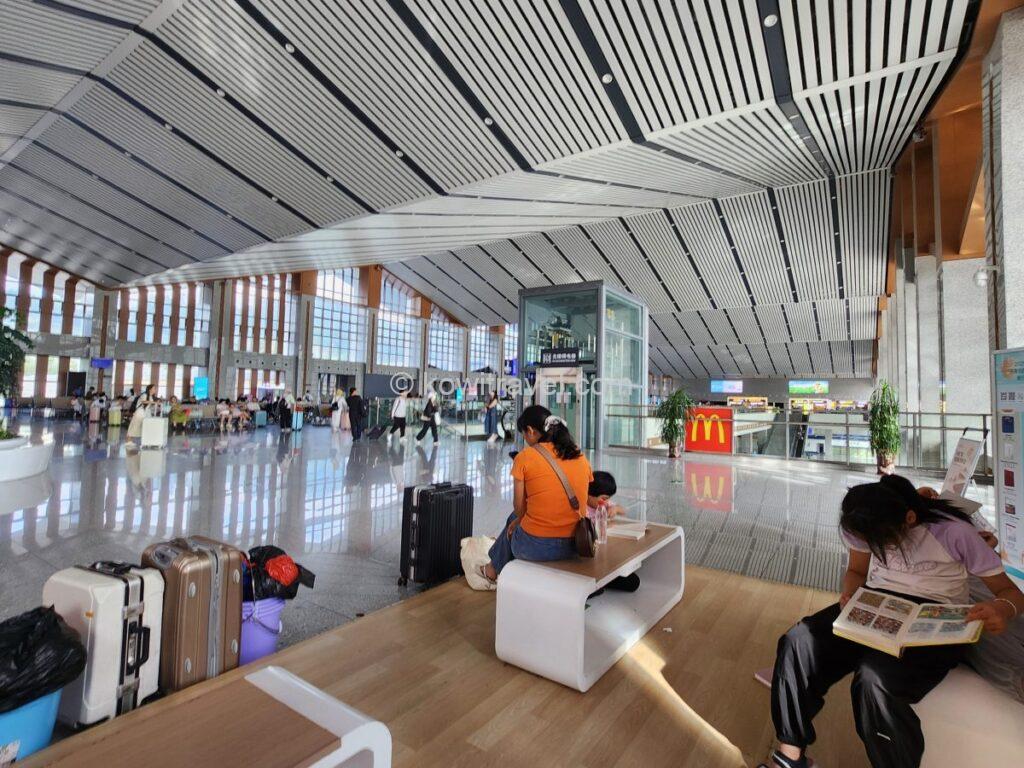
The massive, ultra-modern interior of Zhangjiajie West Railway Station, looking as clean as a major airport terminal.
Our train bolted out of Zhangjiajie West Station, tearing down the tracks toward Guangzhou. The digital display inside the carriage peaked at an incredible 304 km/h. True to the scale of Chinese infrastructure, it glided flawlessly without a single judder.
High-Speed Train Window View
The distance between Zhangjiajie and Guangzhou spans roughly 1,000 km, but these rock-solid high-speed tracks cut the journey down to just 5 hours and 30 minutes. Watching the primeval, jagged canyons outside smoothly dissolve into a sprawling jungle of neon-lit skyscrapers was an absolute spectacle.
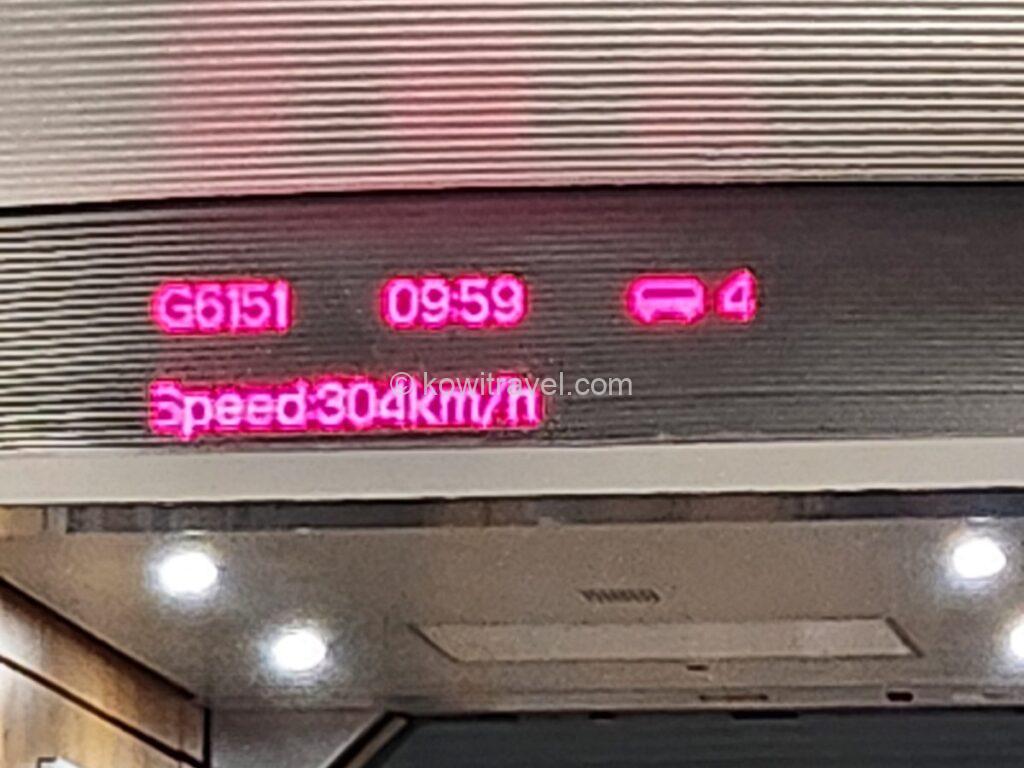
Flying through the mainland at 304 km/h—the raw power of China’s high-speed rail.
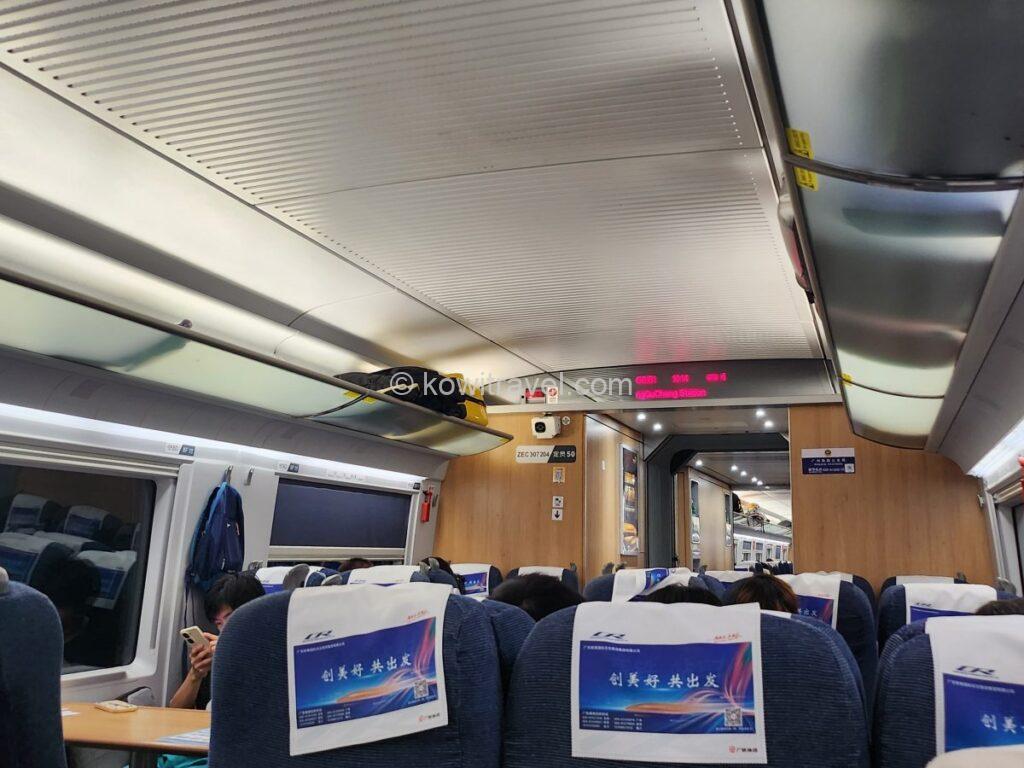
The spacious, incredibly comfortable seating layout inside the Chinese bullet train.
👉[Check real-time high-speed train availability to Guangzhou on Trip.com]
👉[Check real-time high-speed train availability to Guangzhou on Klook.com]
💡 High-Speed Train (Gaotie) Booking Guide:
• Booking Window: Tickets officially open 15 days before departure. Global travelers can easily book via the Trip.com app using just their passport info.
• Cost Efficiency: A 2nd-class ticket for this route runs about 400–500 RMB (approx. AUD 85–105). Considering the speed and luxury, it’s a total steal.
• Station Security Check:
Chinese train stations enforce airport-grade X-ray security. Arrive at least 1 hour early. Sprays, aerosols, or pocket knives are strictly banned—pack smartly!
• Luggage storage: There are open luggage racks near the connecting passageways between train cars; however, if you board late, there may not be any space left. In such cases, you can store your luggage in the gap between the last row of seats and the wall in each carriage.
The train finally dropped us off at the futuristic Guangzhou Baiyun Station, a mega-structure shaped like a giant wave.
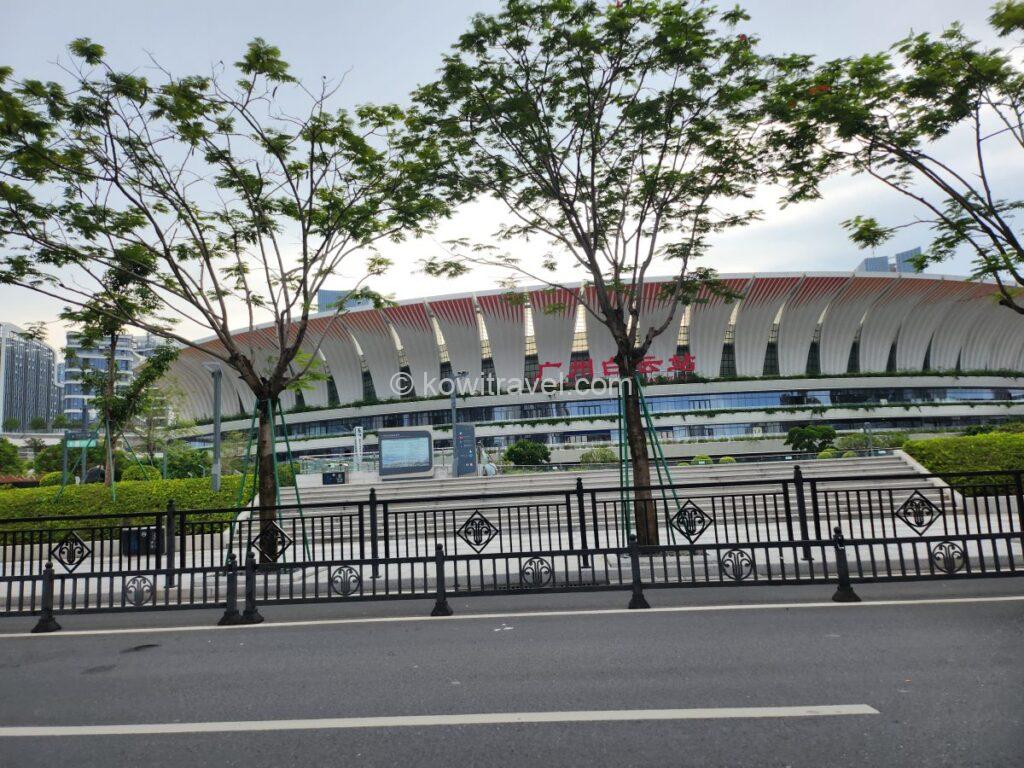
The breathtaking, wave-inspired architecture of Guangzhou Baiyun Station
We soon spotted our cozy 2-night base: Henghe Boutique S Hotel. 5.5 hours of smooth transit, and we were officially checked in!
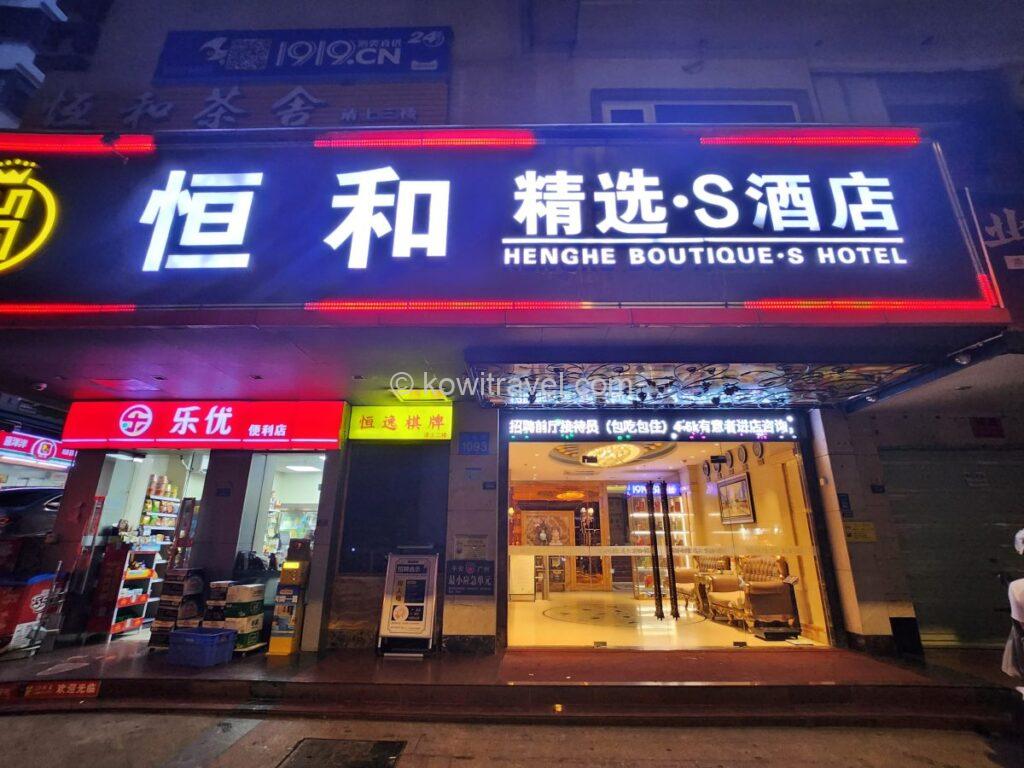
The welcoming entrance of Henghe Boutique S Hotel, our urban oasis for recharging.
2. Hotel Perks & The Breakfast Twist
Our sanctuary in Guangzhou was Henghe Boutique S Hotel, and it proved to be a fantastic choice for unwinding.
To start with the conclusion, it was an absolutely excellent choice for a relaxing getaway. In terms of location, it is highly accessible—situated just about 2 km from Baiyun Station, making it only a 5–10 minute taxi ride away.
👌However, please note that the official name may vary slightly depending on the platform; for instance, on Trip.com, it is listed and can be searched for as “Hunghe Select S Design Hotel (Guangzhou Baixin Railway Station Branch).”
👉[Check real-time booking availability for Honghe Boutique S Hotel on Trip.com]
The moment we stepped into the room, the sheer spaciousness was incredibly refreshing. The room was huge, easily accommodating two massive beds with plenty of space to spare.
A long, convenient shelf ran across the wall opposite the beds—perfect for keeping personal gear organized—and we could lay out multiple heavy suitcases without feeling remotely cramped. The bathroom was beautifully finished with a clean, sleek marble-effect texture.
Being a local boutique hotel, it came with some memorable quirks. Most of the reception staff didn’t speak English, save for one night-shift clerk who could stitch a few sentences together.
In the end, we relied heavily on simultaneous translation apps. Despite the minor language barrier, the staff were incredibly warm, polite, and went completely out of their way to help us.
The absolute highlight was the location. Situated right on a major avenue, hailing a taxi or calling a Didi was effortless. Better yet, the accessibility to the local lifestyle hubs was flawless—we could easily stroll to a massive cluster of high-end modern shopping malls.
Excellent restaurants and cafes were completely within walking distance, making our 2-night stay perfectly frictionless.
But the real, hilarious twist came at breakfast.
While most hotel breakfasts conjure up images of a Western continental spread with eggs and toast, this place went full local. It was an authentic Chinese breakfast centering around steaming baskets of dumplings (Dim Sum) and freshly boiled noodles.
It was advertised as a “buffet,” but it was set up in an incredibly compact, cute little corner with just a handful of tables and chairs. The selection wasn’t huge, but pulling a piping-hot dumpling straight out of the local steamer in that tiny dining nook was an incredibly fun, authentic way to kickstart our mornings.
💡Stay Tips:
• Communication Tool: When booking local boutique hotels in China, keeping Papago or WeChat Translate ready on your phone is non-negotiable. Sharing screens to chat becomes part of the travel charm.
• Breakfast Expectations: If a mid-range Guangzhou boutique hotel offers a breakfast buffet, expect a humble, local “Zaochan” (morning tea) vibe rather than a grand international spread. Embrace the local dim sum culture!
3. Curated City Stops
While Guangzhou is a massive industrial powerhouse rather than a classic scenic holiday town, it holds some incredibly deep cultural pockets and commercial wonders if you know where to look.
3.1) The Breathtaking Artistry of Chen Clan Ancestral Hall
Our very first stop was Chen Clan Ancestral Hall (also known as Chen Clan Academy), universally praised as the pinnacle of historic Cantonese architecture.
👌 Taxi Logistics: Hotel to Chen Clan Ancestral Hall
• Distance & Time: Roughly 9–10 km away. Given Guangzhou’s notorious inner-city traffic, expect a 20–25 minute ride one way.
• Estimated Fare: Around 30–45 RMB (approx. AUD 6.50–9.50) via standard taxi or Didi. Taxis are incredibly easy to hail right outside the hotel avenue.
Built in the late 19th century (during the Qing Dynasty’s Guangxu Emperor era), this massive complex was funded by 72 Chen family clans spread across Guangdong province.
It served as a grand academy providing temporary housing for clan youth prepping for the imperial civil service exams, as well as a sacred hall for ancestral rituals.
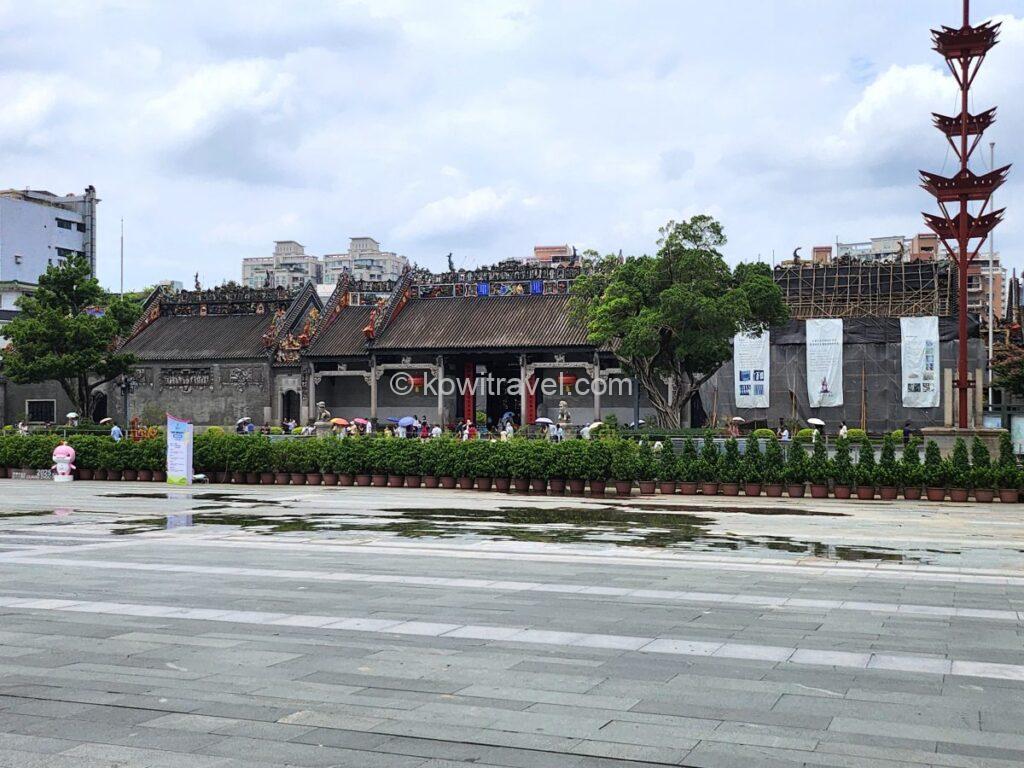
A view of the grand exterior facade of Cheonga-sa (Jinga-sa) Temple, set against a backdrop of a blue sky
Today, it houses the Guangdong Folk Arts Museum, and the second you pass the threshold, you instantly see why it’s a protected national treasure. Absolutely every square inch—rooflines, pillars, doors, and brick walls—is packed with incredibly dense, hyper-detailed carvings that leave you entirely spellbound.
👌 Smart Mobile Ticketing Guide:
Near the ticket counter, you’ll find a massive signboard with a QR code. Simply open WeChat on your phone, scan the code, and follow the mobile prompt to enter your basic details, select a time slot, and pay. The entry fee is a tiny 10 RMB (approx. AUD 2.10). Make sure to bring your physical passport as it is often checked at the gate!
👉 Critical Museum Etiquette:
The ceramics, ivory carvings, and antique furniture inside are irreplaceable national treasures.
Never reach across the warning fences inside the exhibition halls. Do not lean on or touch the ancient wooden structures and pillars. Photography is fully allowed, but turn off your camera flash to help protect the delicate ancient relics!
Here are the magnificent traces of art we encountered inside.
While the entire academy is a masterpiece, these views completely stole the show:
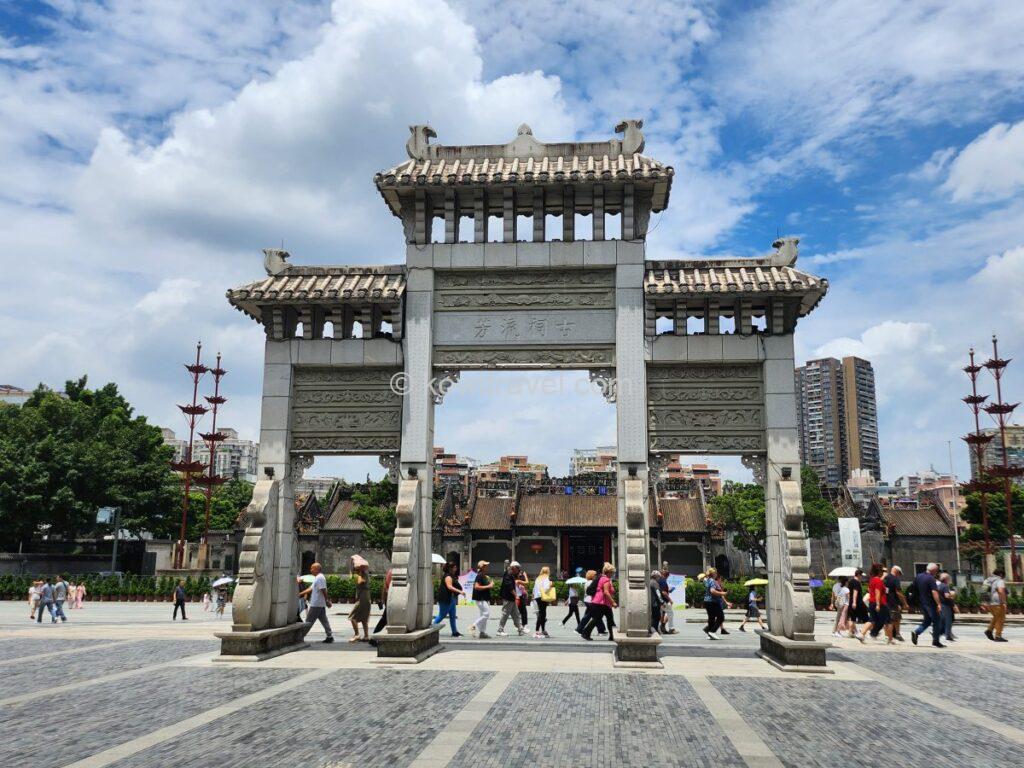
The grand and sweeping front facade of the Chen Clan Ancestral Hall under a crisp blue sky
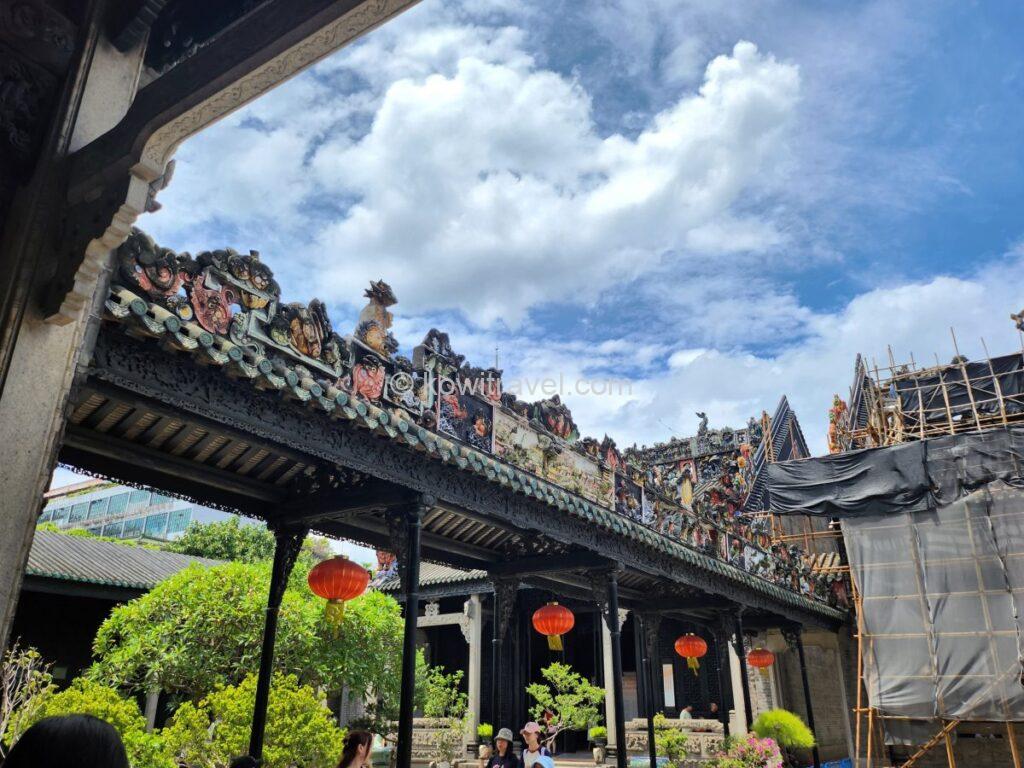
Lush green trees and vibrant red lanterns blending flawlessly with the elegant traditional rooflines of the serene inner courtyard
Chen Clan Academy Courtyard Panorama – Perfectly capturing the breezy, 360-degree tranquility of this historic space.
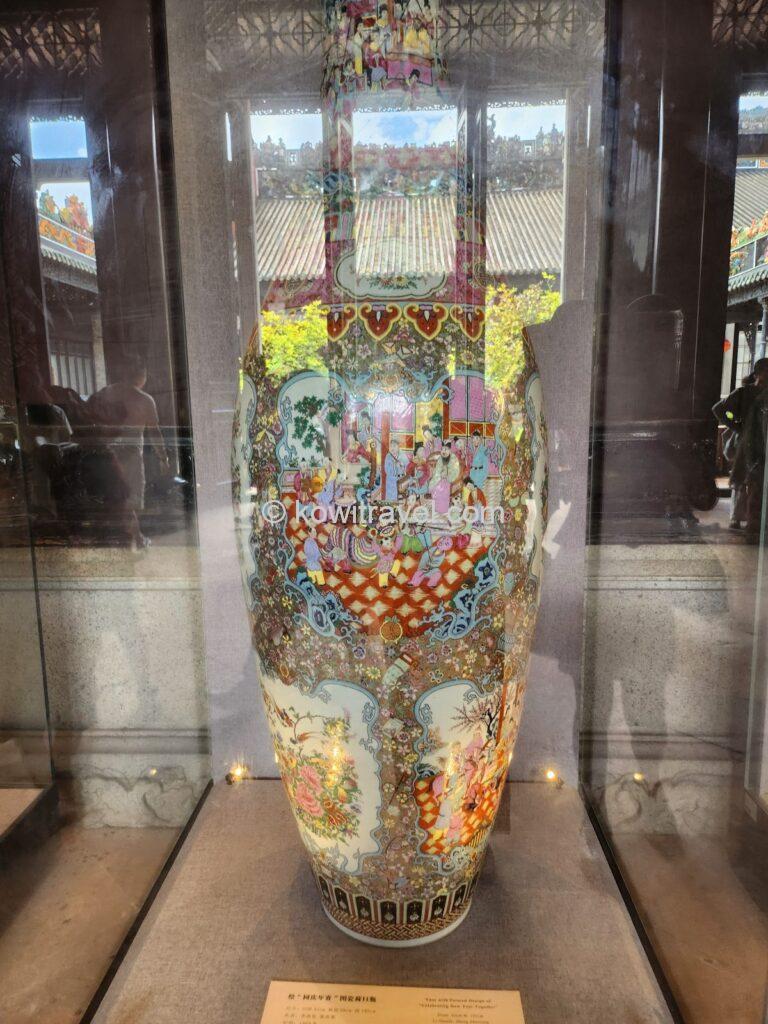
A large ceramic vase featuring intricate figure paintings and patterns, lavishly embellished with gold leaf.
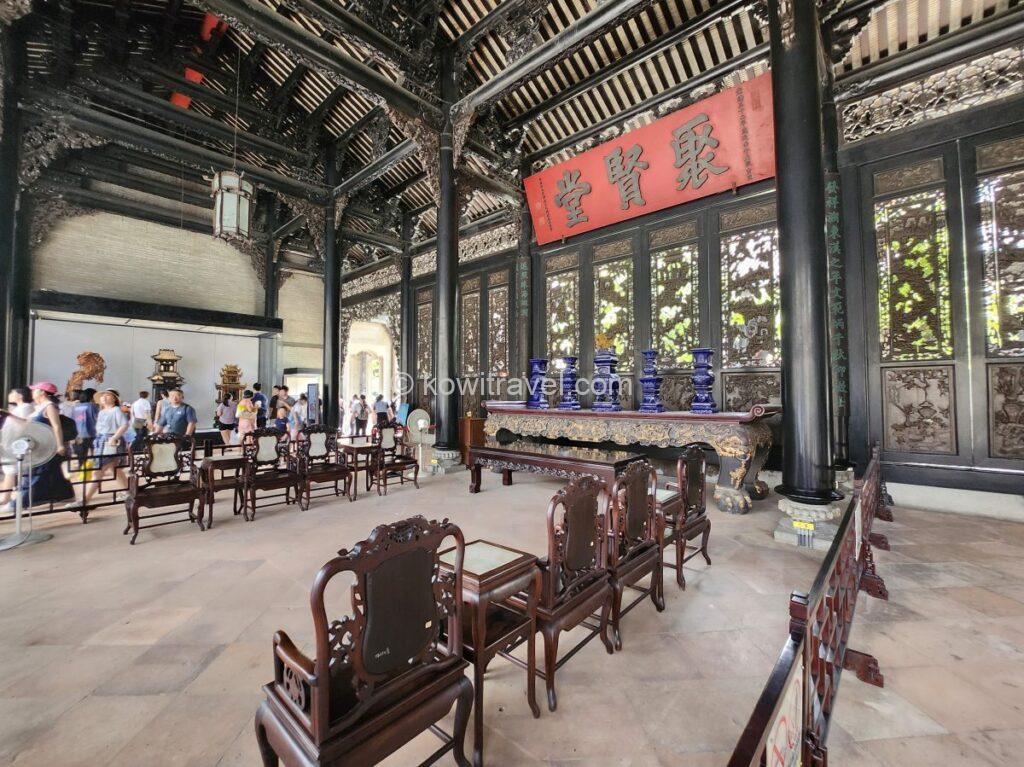
The solemn, stately interior of Xuxian Hall , the historic central gathering space where the Chen clan elders met to discuss major affairs
Interior Souvenir & Gallery Space – a live look at the vast museum interior scale and the vibrant buzz of fellow visitors.
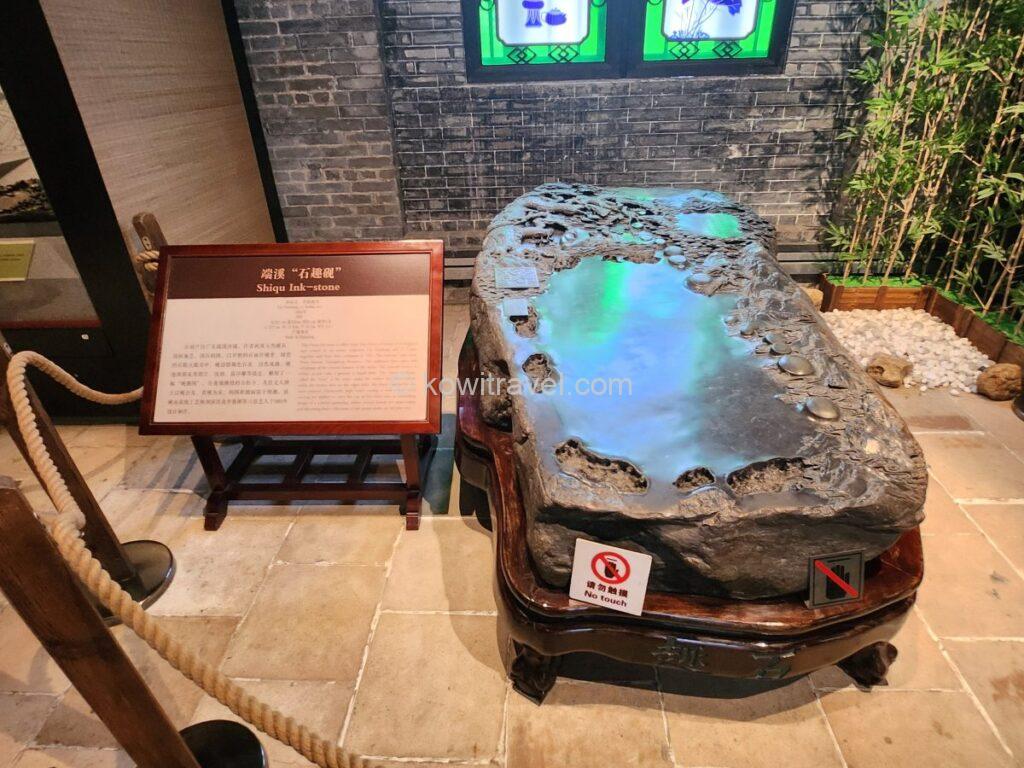
A massive, priceless Duanzhou inkstone glowing with a mystical blue sheen, carved with hyper-detailed mountain landscapes
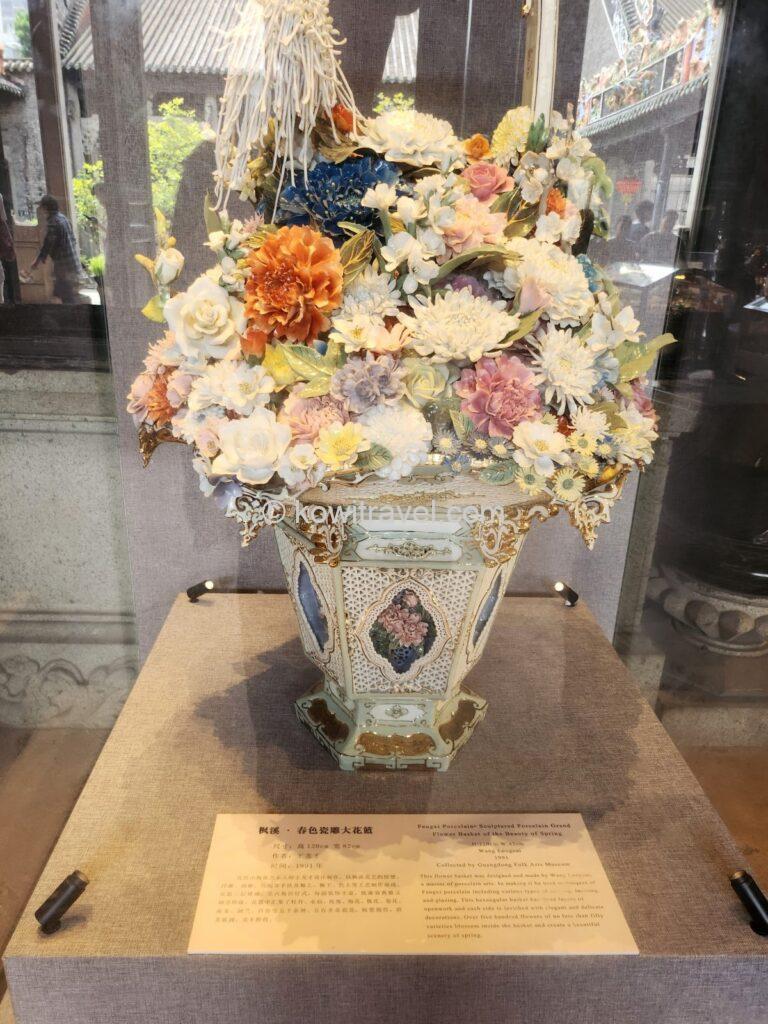
A white porcelain flower basket, meticulously crafted—piece by piece—to capture the radiant beauty of a spring day.
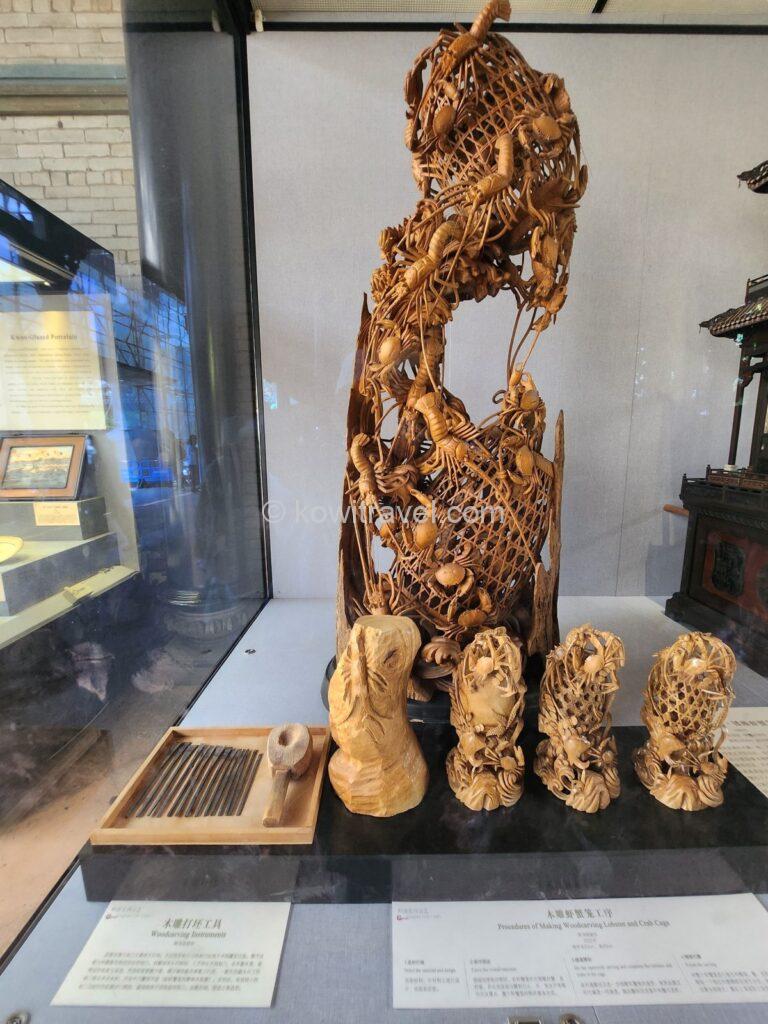
The absolute pinnacle of Cantonese woodcarving—an entire tree trunk hollowed out to perfectly depict crabs and lobsters tangled in a fishing basket
Standing there, it became entirely clear why the Chen family poured an absolute fortune into building this sanctuary.
It is an essential pilgrimage for anyone visiting Guangzhou—a mesmerising celebration of the absolute limits of human craftsmanship, offering a wonderful contrast to Zhangjiajie’s raw nature.
3.2) The Replica Market: A High-Tier Copycat Jungle Driven by Global Scales
From ancient heritage, we pivoted directly into a sprawling labyrinth of sheer modern materialism: Guangzhou’s legendary replica markets, most famously epitomised by Baiyin Leather City.
👌 Taxi Logistics: Chen Clan Hall to Baiyun Leather City
• Distance & Time: Roughly 5–6 km. Clear roads take 15 minutes, but bad traffic can stretch it to 25 minutes.
• Estimated Fare: 20–25 RMB (approx. USD 2.93–3.67). Simply show the driver the characters “Baiyin Leather City(白云皮具城)”.
💡 The Origin Story & Market Dynamics
Back in the 1980s, Guangzhou stood at the absolute epicenter of China’s economic opening, acting as the designated “factory of the world” that manufactured apparel and leather goods for top global brands. Over decades of handling OEM (Original Equipment Manufacturer) orders, the technical skills of local leather crafters and factory lines reached an elite global tier.
Leveraging this incredible local craftsmanship and raw material access, these massive wholesale buildings evolved. What started as humble leather wholesale lots transformed into a staggering, multi-building luxury replica empire.
It looks less like a street market and more like an endless complex of upscale department stores.


A look inside a massive Baiyun Leather City building.
- What’s on the Racks?
You will find every major global luxury brand—Louis Vuitton, Chanel, Gucci, Hermes—replicated across bags, wallets, watches, shoes, and clothing.
The quality spans a massive spectrum, ranging from cheap, plastic knock-offs up to elite “Mirror Quality” goods that require an expert eye to tell apart from the real deal.
👉 Real-World Bargaining & Shopping Guide
• Aggressive Bartering is Non-Negotiable: Initial quotes from shopkeepers are sky-high. Start your opening counter-offer at 30%–40% of their original price. If they refuse, casually walk away—they will almost always hit the calculator buttons and call you back with a massive drop.
• The Triple-Check Rule: The sample on display is rarely the exact item you take home. Before handing over cold cash, inspect the actual item they bring from the back. Scan the stitching, check the brand spelling, and slide every zipper.
• The “Secret Room” Warning: Top-tier AAA grade items are rarely kept on display due to local raids. Clerks will offer to take you to hidden back rooms or separate apartment offices. Avoid dark, overly isolated spaces, and only follow them if you are genuinely committed to a premium buy.
• Customs Risk: Know the legal boundaries. Bringing counterfeit goods across international borders can result in total seizure, heavy fines, and customs headaches. Keep your buying strictly light, casual, and focused on the fun experience!
- The Shocking “Exodus” Chaos Outside the Gates
The absolute craziest part of the market wasn’t inside the buildings—it was the pure, unadulterated chaos waiting on the street as we left. The exit pathway leading back to the main avenue was a bottlenecked, narrow road completely choked out by an unbelievable sea of humanity and stalled cars.
Horns were blaring continuously, vehicles were trapped at a dead standstill, and people were darting like refugees through the microscopic gaps between moving bumpers.
We quickly learned that this frantic scene wasn’t a one-off event; it is the daily heartbeat of the district. It’s a 24-hour crossroads where global cargo runners, wholesalers, and packed shipping carts collide. Most fascinatingly, the entire street was packed with an immense number of African traders and merchants.
- The African Merchant Legacy in Guangzhou
This unique demographic pocket traces back to the late 1990s and early 2000s.
When China launched its major economic push and expanded the Canton Fair (China’s biggest trade expo) right here in Guangzhou, merchants from across the African continent flooded the city looking for affordable consumer goods to supply their home markets.
This spawned a vibrant local trading hub, with parts of the city earning nicknames like “Little Africa.”
The heavy concentration around the replica markets comes down to a very specific business ecosystem.
In countries where local manufacturing infrastructure is limited, high-quality luxury replicas from Guangzhou enjoy massive, explosive demand.
- The Mystery of the “Giant Black Plastic Bags”
Watching the streets, it was incredible to see these African merchants hoisting massive, body-sized black plastic bags and taped burlap sacks onto their shoulders or heads.
These aren’t casual tourists buying a souvenir; they are high-volume, corporate-scale wholesale runners.
They scour the complex, buying dozens or hundreds of replica items at a time, packing them into heavy-duty black plastic bundles to streamline volume and keep a low profile from inspectors.
These giant bundles are immediately moved to local Guangzhou logistics warehouses, packed into heavy freight containers, and shipped directly to home markets like Nigeria, Ghana, or Mali. Standing on that chaotic street corner, we were looking at a raw, real-time window into a massive global trading pipeline.
4. Guangzhou After Dark: Modern Mega-Malls & The Flying Scooters
Guangzhou is a fascinating metropolis where gleaming futuristic skyscrapers and the gritty, high-speed hustle of mainland life seamlessly collide.
After surviving the energy of the markets, we walked out and stumbled upon a charming Italian pizza restaurant with a lovely open-air terrace right across the street.
Having eaten nothing but heavy local dishes for three weeks straight in Zhangjiajie, sitting down at a breezy outdoor table with a fresh, hot pizza while watching the ultra-sleek city rush by was the ultimate urban luxury.


The relaxing outdoor terrace of the Italian restaurant right outside the bustling market zone (left), Enjoying a fresh pizza in the cool shade—a perfect Western comfort break mid-journey(right)
After a quick rest back at the hotel, we headed out for an evening walk, strolling just 5 to 7 minutes down the road to a soaring, ultra-modern mega shopping mall.
Guangzhou Street Night Scene: Capturing the electric energy, flashing lights, and vibrant traffic flow of the city at night.
The immaculate, beautifully air-conditioned interior was lined with flagship tech stores and sleek fashion houses, letting us feel the astonishing speed of Guangzhou’s modern development.
But the absolute peak of our city exploration happened completely by chance while walking back to admire the night skyline. Amidst the brilliant neon displays, we caught a sight that made us completely double-take: a steady stream of motorbikes and electric scooters casually zipping up and over a pedestrian overpass bridge!
Scooters Riding up the Overpass
At first, we laughed, thinking, Wow, this city is beautifully lawless!
But as we stepped closer to investigate, I spotted a brilliant piece of design.
Built right along the edge of the overpass stairs was a smooth, flat concrete ramp tailored specifically for two-wheelers to seamlessly roll up and down. Far from being a chaotic traffic violation, it was a highly intentional, pragmatic piece of urban infrastructure designed to accommodate a city powered by scooters.
Seeing commuters casually fly across a pedestrian bridge over a multi-lane highway remains one of the most uniquely memorable, brilliant moments of our entire Guangzhou stay.
5. The Verdict: Processing the Epic Scale of Zhangjiajie
Sitting back in a quiet, cozy Guangzhou café with a warm cup of tea finally gave us the mental space to unpack the whirlwind of the past three weeks.
From the opening trails of Sanli Park and the deep abyss of the Grand Canyon to the glowing underground rivers of Huanglong Cave and the dizzying heights of Tianmen Mountain—it was nothing short of an odyssey.
To be absolutely blunt: the sheer physical scale of Zhangjiajie and Tianmen Mountain are completely unmatched by any other destination on this planet.
Reflecting on the journey leaves you grappling with two immense, contrasting emotions:
- Awe of Primeval Nature: Standing before those towering quartz-sandstone pillars, carved out by millions of years of wind and rain, leaves you feeling beautifully small, humbled, and acutely aware of human mortality.
- Reverence for Indomitable Human Grit: Seeing how humanity stubbornly looked at those impossible, sheer vertical cliffs and decided to bolt glass walkways to them, string world-record cable cars through the clouds, and hollow out the interior core of a mountain to slide giant escalators through—it is utterly mind-blowing.
It forces a deep respect for both the majesty of the Earth and the terrifying stubbornness of human engineering. It stands firmly as the ultimate, unforgettable masterpiece of our travel lives.
6. Next Stop: Trading China for 5 Weeks of Tropical Malaysian Slow Travel!
Our 2-night charging phase in Guangzhou is officially wrapped, our batteries are at 100%, and the suitcases are zipped tight. We are trading the massive Chinese concrete metropolis for the tropical, multi-cultural warmth of Southeast Asia.
Our massive 5-week long-stay free independent traveler (FIT) itinerary through Malaysia is officially about to begin! Here is how the next chapter shapes up:
- Phase 1 – The Island Transit: We board a flight from Guangzhou straight into Kuala Lumpur, then immediately hop onto a domestic connection, flying straight to the legendary food and art capital of Penang Island.
- Phase 2 – Living Slow in Penang (3 Weeks): We will spend three beautiful, uninterrupted weeks slow-traveling through George Town’s UNESCO-listed heritage streets, hunting down world-famous street food, and soaking in the historic colonial architecture.
- Phase 3 – Deep-Diving Kuala Lumpur (2 Weeks): We will loop back to the capital for a final 2-week stint, fully dissecting the modern metropolis, the soaring Petronas Twin Towers, and the hidden local neighborhoods before the final curtain falls.
We are packing this upcoming Malaysian series with incredibly practical, high-value, and realistic slow-travel guides—stay tuned, the best is yet to come!
👉Click here to read my previous guide: Episode #14. Tianmen Mountain Guide
“This post contains affiliate links. If you make a booking or purchase through these links, I may earn a small commission at no additional cost to you.“
Leave a Reply